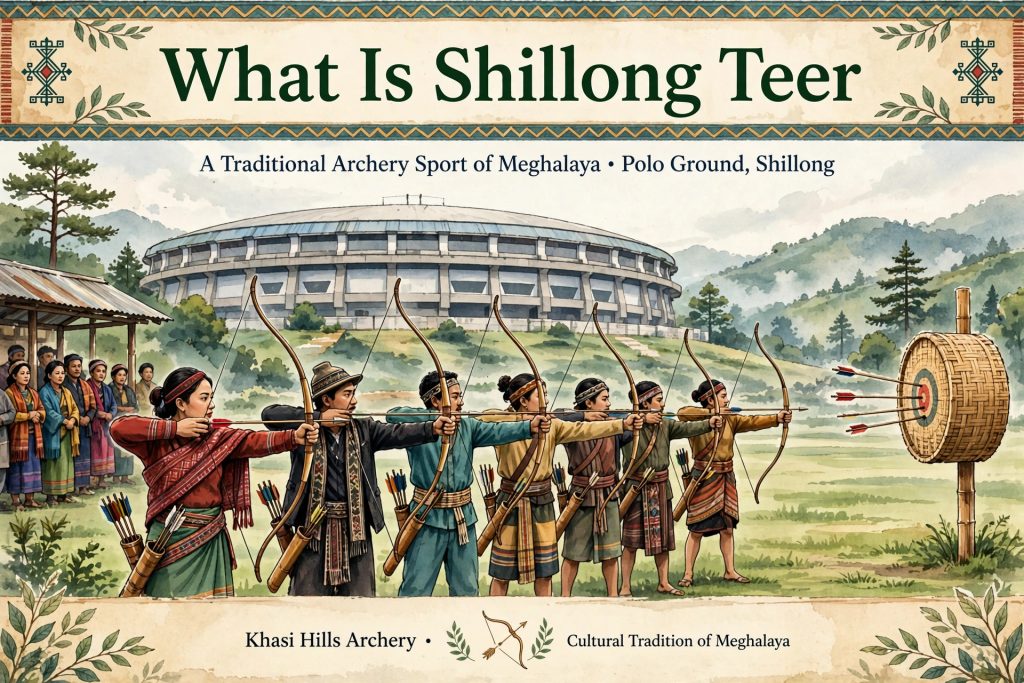
Picture a wide open ground in the hills, ringed by spectators sipping hot tea in the cool afternoon air. At one end of the field, a row of archers draws bamboo bows in near perfect unison. A soft collective thrum fills the air as hundreds of arrows arc toward a tall cylindrical target of woven bamboo. When the shooting stops, officials step forward and begin the slow, careful work of counting every arrow that found its mark. The last two digits of that count will become a number that thousands of people have been waiting for all day. If you are asking what is Shillong Teer, that scene is your answer in a single image: a living archery contest that is also a legal lottery.
Shillong Teer is unlike any other lottery in India, and perhaps in the world. There are no machines, no balls bouncing in a chamber, no computer generated digits. The winning number is born from wood, string, feathers, and human skill on a real shooting ground in Shillong, the capital of Meghalaya. This beginner guide from View Teer Result tells the full story: where the game came from, how a tribal pastime turned into a regulated teer lottery, exactly how teer works step by step, how to read the daily results, and how to approach the game responsibly.
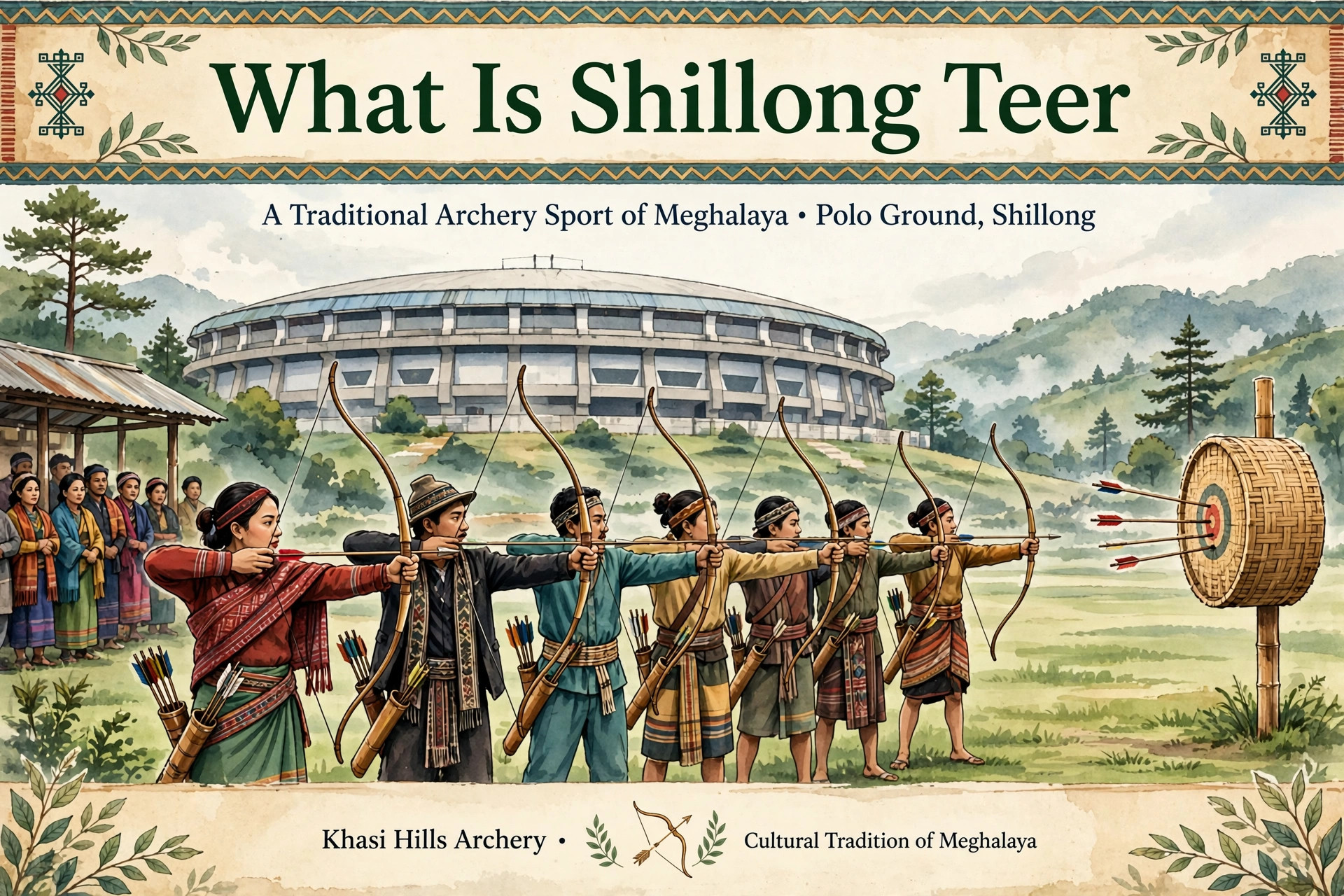
Where the Story Begins – The Khasi Hills
Every version of shillong teer history starts in the same place: the rolling green hills of Meghalaya, home of the Khasi people. To understand the game, you first have to understand the land and the community that created it.
A Landscape That Shaped the Bow
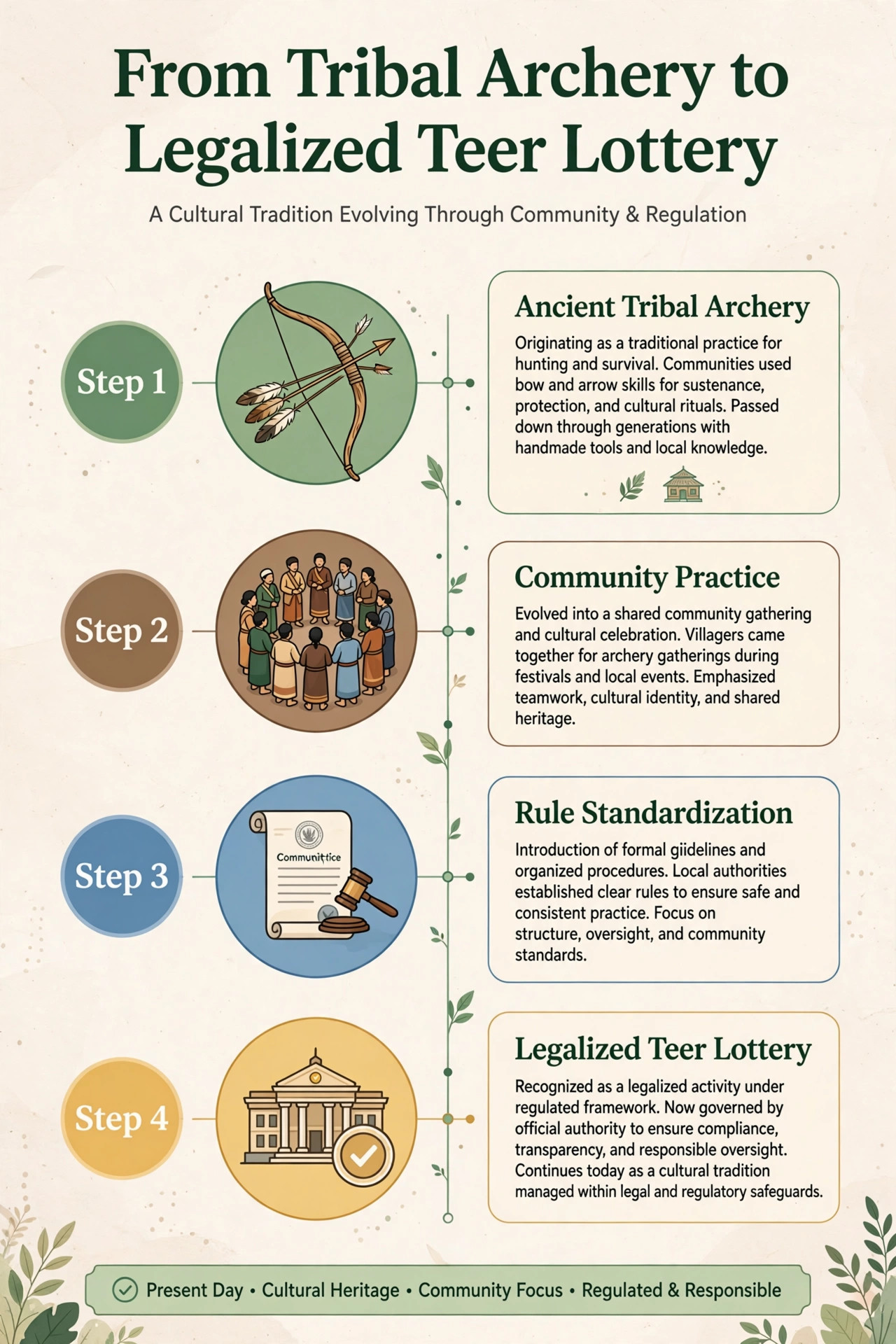
The Khasi Hills are a land of deep valleys, dense forests, and sudden mists. For centuries, life here demanded self reliance. Villages were scattered, travel was on foot, and the forest provided both sustenance and danger. In such a world, the bow and arrow were essential tools. They protected fields from wild animals, put food on the table, and served as the first line of defense for a community.
Because the bow mattered so much, skill with it mattered too. Khasi boys learned to shoot as a matter of course, the way children elsewhere might learn to swim or ride a bicycle. But what began as necessity soon became art. The Khasi people developed a distinctive archery tradition built around bamboo bows and arrows, equipment crafted entirely from materials found in the surrounding forests. Shooting well with a bamboo bow is genuinely difficult. The draw is uneven, the arrows are light, and the archer must read the wind with unusual sensitivity. Mastering it took years, and those who mastered it earned real respect.
Archery in Khasi Festivals and Community Life
Over time, archery grew beyond utility into celebration. Khasi festivals and seasonal gatherings featured archery competitions that drew the finest shooters from across the region. These were not quiet affairs. They were festivals in the fullest sense: music, food, dancing, and crowds of spectators who knew the archers by name and debated their technique with the passion of sports fans anywhere.
Children grew up watching these contests and dreaming of competing. Elders served as informal judges and keepers of tradition. The shooting ground became one of the most important social spaces in Khasi community life, a place where news was shared, friendships were formed, and the heritage of the people was performed in the open air. This is the cultural soil from which the teer game eventually grew. Without a community that already loved watching archery, there could never have been a lottery based on it.
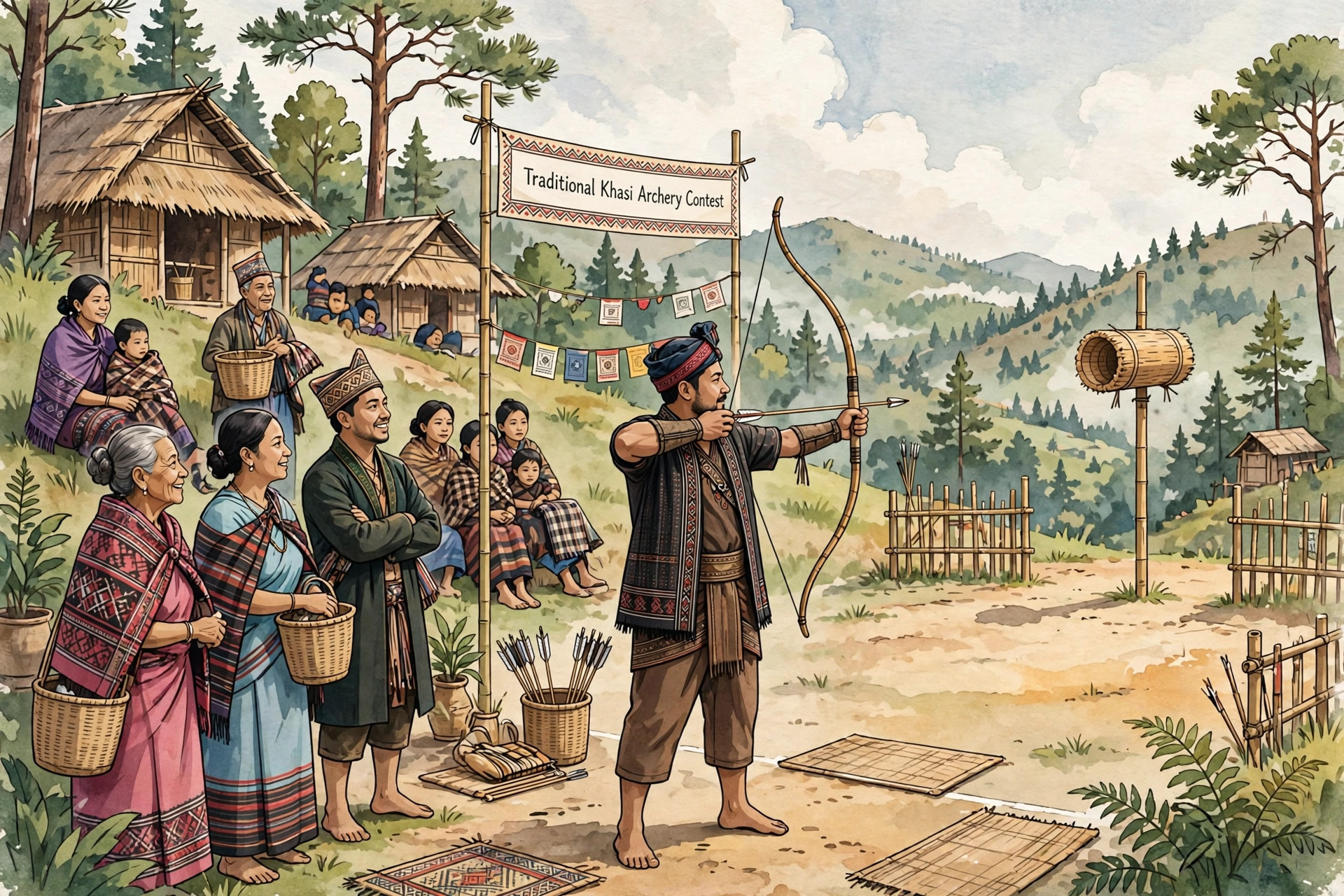
How a Tribal Pastime Became a Teer Lottery
The transformation of Khasi archery contests into the Shillong teer lottery did not happen overnight. It unfolded across generations, driven by the enthusiasm of spectators and eventually by the practical wisdom of the state government.
Friendly Wagers on the Sidelines
Wherever crowds gather to watch a contest of skill, wagers follow. It is one of the oldest patterns in human recreation. At Khasi archery grounds, spectators began betting among themselves on the outcomes they were watching. At first these were simple friendly stakes between neighbors: a few rupees on which archer would shoot the straightest round, or on how many arrows would strike the target in a session.
As Shillong grew into a major hill town and then the capital of Meghalaya, these informal wagers grew with it. The archery grounds drew larger crowds, the betting became more organized, and informal networks of ticket sellers appeared to take wagers from people who could not attend in person. By the latter half of the twentieth century, wagering on archery results had become a major informal activity in and around Shillong, with regular schedules, well known archers, and a large public following.
This informal era was vibrant but chaotic. With no official oversight, disputes over results were common, and neither players nor organizers had any formal protection. The game was deeply popular, yet it lived entirely outside the law.
The Move Toward Legal Recognition
The government of Meghalaya eventually faced the same question that confronts every authority dealing with a deeply rooted popular game: suppress it or regulate it. Suppression had little chance of working against a practice so woven into Khasi culture, and it would have criminalized something the community regarded as heritage. Regulation offered a better path.
In the early 1980s, the state brought archery based betting under legal control through its amusement and betting tax framework. This decision legalized the teer game and placed it under official supervision. Licensed organizers would conduct the shooting sessions. Licensed counters would sell the tickets. Results would be declared through official channels, and the state would collect tax revenue from the entire operation.
The effect was transformative. Overnight, in legal terms, the game moved from the shadows into the open. Disputes dropped because results were now declared officially and could be verified. Players gained the protection of a regulated system. And the cultural core of the game, the archery itself, was preserved rather than destroyed. The meghalaya teer of today, a state regulated teer lottery, dates its legal birth to this decision. Background on the city that hosts it all can be found on Wikipedia’s Shillong page, which describes the hill capital where the game is played, and official state information is published on the Meghalaya government portal.
What Is Shillong Teer in the Modern Game
With the history understood, let us look at what the game actually is today for someone encountering it for the first time.
The Daily Rhythm at Polo Ground
The modern Shillong Teer follows a daily rhythm that regular players know by heart. On working days, the action centers on the Polo Ground in Shillong. Ticket counters across the city sell wagers for the day’s rounds in the hours before play begins. In the mid afternoon, the First Round (FR) takes place: the archers shoot, the arrows are counted, and the first result of the day is declared. Later in the afternoon, the whole cycle repeats for the Second Round (SR), with fresh ticket sales, a fresh shooting session, a fresh count, and a second declared result.
Each round is a complete event in itself. The FR result has no influence on the SR result, because each comes from its own separate count of arrows. The game is generally not held on Sundays or certain public holidays, giving the archers and organizers a weekly rest.
The Archers Behind the Arrows
It is easy for newcomers to focus only on the numbers and forget the human beings at the center of the game. The archers of Shillong Teer are dedicated sportspeople who train for years to shoot with the consistency the game demands. Drawing a bamboo bow to full strength dozens of times in a session, while a crowd watches and the afternoon wind moves across the ground, requires remarkable physical and mental discipline.
These archers are the living link between the ancient Khasi tradition and the modern lottery. When they shoot, they are participating in a lineage of marksmanship that stretches back centuries, even as their arrow counts decide twenty first century lottery results. For the people of the Khasi Hills, the archers are respected athletes, and attending a teer session is as much about watching them perform as it is about the numbers.
How Teer Works Step by Step
One of the most common questions from beginners is simply: how teer works in practice, from a player’s point of view. Here is the complete sequence for a single round.
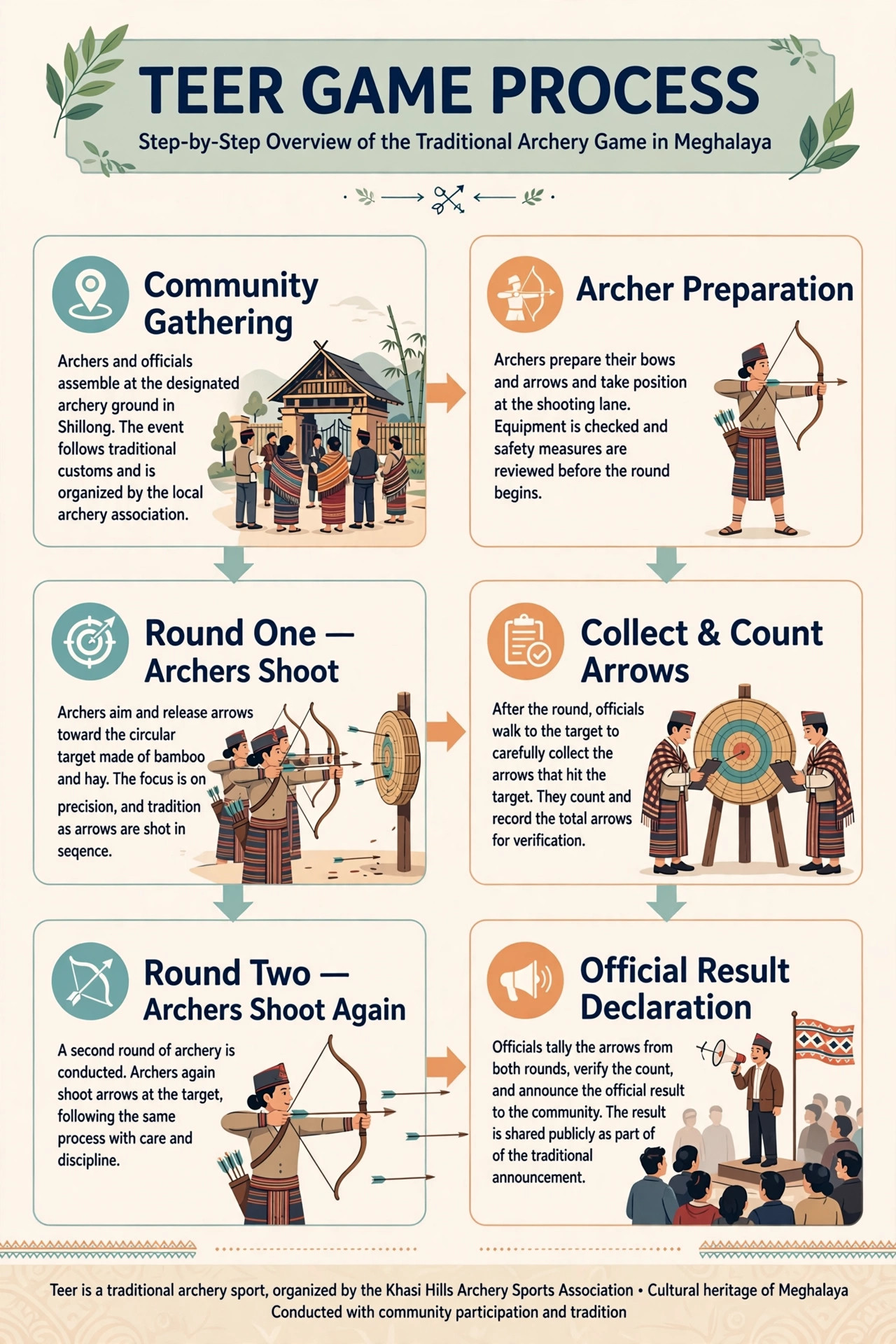
Step 1 – Tickets Go on Sale at Licensed Counters
Before each round, licensed ticket counters sell wagers to the public. A player chooses a two digit number from 00 to 99 and buys a ticket for that number for the upcoming round. Each round has its own ticket sales window, which closes before the shooting begins. Tickets for the First Round cannot be used for the Second Round, and separate tickets must be purchased for each round a player wishes to enter.
Step 2 – The Archers Shoot
Once ticket sales close, the archers take their positions at the Polo Ground and the shooting session begins. Dozens of archers shoot in a coordinated round, each loosing a set number of arrows at the cylindrical bamboo target placed at the regulation distance. The air fills with arrows, and spectators watch the target bristle with each passing minute. This is the sporting heart of the game, and it is genuinely thrilling to witness.
Step 3 – Officials Count the Hits
When the shooting ends, officials move to the target and begin counting. Only arrows that actually struck the target are counted. Arrows that missed or fell short do not enter the tally. The counting is done carefully and openly, because the entire result depends on this single number. With hundreds of arrows shot in a round, the total count of hitting arrows is always a large figure.
Step 4 – The Result Is Declared
The last two digits of the verified arrow count become the round’s result, a number between 00 and 99. To illustrate the format only: if a count ended in digits shown as “-” (placeholder, example only, not a real result), the declared result would be those two digits. The result is announced at the ground and then circulated through official channels and result portals. Players compare their ticket numbers with the declared result to see if they have won.
Shillong Teer and the Other Games of Meghalaya
Shillong is the most famous teer center, but it is not the only one in Meghalaya. Understanding the wider family of games helps put Shillong Teer in context.
Juwai and Khanapara in Context
The towns of Juwai and Khanapara in Meghalaya also host their own teer games, run on the same basic principle: archers shoot, arrows are counted, and the last two digits decide the result. Each center has its own archers, its own ground, and its own schedule of rounds. Juwai Teer and Khanapara Teer are separate games from Shillong Teer, with their own ticket counters and their own declared results.
For beginners, the key point is not to mix them up. A Shillong Teer result belongs to the Shillong game only, and tickets are round specific and center specific. When you check results on View Teer Result, each game is listed separately so you can follow exactly the game you are interested in. Our dedicated Shillong Teer result page carries the daily FR and SR numbers for the Shillong game alone, while the full teer result list brings the day’s games together in one view.
What Is Shillong Teer – Key Facts to Remember
If you skimmed the story above, here is the whole beginner picture in one place. Shillong Teer is a legal archery based lottery in Shillong, Meghalaya. Players buy tickets for a two digit number from 00 to 99. Real archers shoot at a bamboo target, officials count the arrows that hit, and the last two digits of the count become the result. Each game day has a first round (FR) and a second round (SR), each with its own separate result. The game is generally played Monday to Saturday, rests on Sundays and public holidays, and is strictly for adults aged 18 and above. Tickets are sold only at licensed counters before each round, and results are declared publicly the same day.
Where to Check Shillong Teer Results
Once you understand what Shillong Teer is, the next habit to build is checking results in the right place. Always use a dedicated result page that separates each market, each session, and each round, so you never confuse a morning number with an afternoon one or a Shillong number with a Juwai number. On View Teer Result, the Shillong Teer result page shows the day’s FR and SR numbers for the Shillong game, the full teer result list gathers every market in one daily view, and the Juwai teer result page covers the Juwai game separately. You can reach all of these from the View Teer Result homepage, which is the simplest starting point for any beginner.
Frequently Asked Questions
What is Shillong Teer in simple words?
Shillong Teer is a legal lottery game in Shillong, Meghalaya, where the winning number is decided by archery. Ticket holders pick a two digit number from 00 to 99, archers shoot arrows at a target, officials count the arrows that hit, and the last two digits of that count become the winning number for the round.
What do FR and SR mean in Shillong Teer?
FR stands for first round and SR stands for second round. They are two separate games played on the same day, each with its own shooting session, its own arrow count, and its own declared result. A ticket bought for FR applies only to the first round result, and a ticket bought for SR applies only to the second round result.
Is Shillong Teer legal?
Yes. Shillong Teer is a legal, state regulated lottery in Meghalaya, brought under the state’s amusement and betting tax framework in the early 1980s. It is run by licensed organizers through licensed ticket counters, with results declared officially. It remains illegal in states where it is not authorized, so the game should only be played where it is legally permitted.
Who can play Shillong Teer?
Only adults aged 18 and above may participate. Like all lotteries, teer should be played responsibly and only with money you can afford to spend on entertainment. If playing ever stops feeling like fun, step back and seek support. Never borrow money to play, and never treat any lottery as a source of income.

Where can I check the Shillong Teer result?
Results are declared at the teer ground and then published on result portals the same day. On this site, the dedicated Shillong Teer result page carries the daily FR and SR numbers for the Shillong game, and the full teer result list shows every market together. Always check that you are reading the correct market, session, and round before comparing a number with your ticket.
On which days is Shillong Teer played?
The game is generally played Monday to Saturday. Sundays are usually a rest day, and the game is also paused on certain public holidays and festival days. Schedules can change, so confirm the day’s play on a current result page rather than assuming the game is on.
Can I play Shillong Teer online?
Tickets are sold through licensed physical counters in the areas where the game is authorized. Be cautious of websites or messages claiming to sell teer tickets online or asking for advance payments, as many of these are scams. Play only through official, licensed channels, and remember that this guide is for information only and contains no betting advice.
Conclusion
Shillong Teer is far more than a lottery ticket. It is a living piece of Khasi heritage, an archery contest that became a regulated public game, and a daily ritual that brings a hill city together. Now you know what Shillong Teer is, how teer works from ticket to result, what FR and SR mean, how the game became legal, and where to check results safely. If you are new to the game, start by watching a round, read the result cards carefully, and always play responsibly. For daily updates, keep the View Teer Result Shillong page bookmarked and check back after each round.