
Every day, after the day’s teer sessions are declared, the conversation shifts to the most recent completed record, and that is exactly what searching for teer result yesterday is about. Whether you missed a session, want to double check a number you noted down, or simply keep a personal record of past outcomes, yesterday’s teer result is the single most referenced piece of information in the teer world. This guide explains what yesterday’s result means, where to find it, how to read it correctly, and why it matters, covering the Shillong, Juwai and Khanapara markets in detail.
Teer is an archery based lottery game played legally in Meghalaya, and like any scheduled lottery it produces a fresh set of declared numbers each day. Because declarations happen across morning, afternoon and night sessions, a full “yesterday” record only settles once the last session of the previous day has been declared. Understanding that rhythm is the key to finding the right numbers without confusion. In the sections below you will learn the declaration schedule, the structure of a yesterday result listing, how to verify it, and the sensible way to use past results. This article is strictly informational. It explains how results are organized and where archives live. It contains no prediction numbers, no target numbers and no betting advice of any kind.

What Teer Result Yesterday Means
The phrase teer result yesterday refers to the complete set of declared numbers from the most recent finished teer day. A teer day is not a single draw. It is a series of sessions, morning, afternoon and evening, each of which produces two rounds of declared numbers: the first round (FR) and the second round (SR). When someone asks for yesterday teer result, they are asking for all of those declared pairs from the previous calendar day.
This matters because a partial answer can be misleading. If you only look at the afternoon session numbers, you are missing the morning and night sessions. A proper yesterday listing shows each market separately, usually labelled Shillong, Juwai, Khanapara, and sometimes Jowai Ladrymbai or night sessions, with FR and SR values beside each market name and the date clearly printed at the top.
It also helps to be precise about what “yesterday” means when sessions run late. Night sessions are declared late in the evening, and they still belong to the same calendar day’s record. So yesterday’s complete record includes the night session of the previous day, not the night session declared after midnight, which belongs to today. Archive sites handle this consistently by grouping results under the calendar date of declaration.
Why People Search for Yesterday Teer Result
There are several practical reasons people look up yesterday’s teer result, and none of them require anything beyond simple record keeping.
The most common reason is a missed session. Teer players often follow one market closely, and if they are busy during the afternoon declaration, they return in the evening to see what was declared. A player who placed a ticket in the morning session will check yesterday teer result the next day if they did not see the outcome at declaration time.
A second reason is verification. Many players note down numbers they heard from a counter or a friend, and they want to confirm the exact two digit values against an independent archive before acting on them. Yesterday’s result is the freshest settled record, so it is the one most often cross checked.
A third reason is personal record keeping. Some enthusiasts maintain their own notebooks or spreadsheets of past results, and yesterday’s numbers are the newest entry they need to add. Over months, these personal records become the material people use to study patterns, although it is worth remembering that teer is a lottery and past outcomes do not determine future ones.
Finally, researchers and writers often search for yesterday teer result to keep their own result pages accurate. A result site that shows today’s numbers still benefits from a correct yesterday archive, because visitors compare the two days side by side.
How Teer Sessions Become Yesterday’s Record
To read teer result yesterday correctly, you need to understand how the day’s sessions turn into the archive. Each market runs its sessions on a fixed daily rhythm, and declarations follow that rhythm throughout the day.
Morning Sessions
Morning sessions begin the teer day. Shillong Morning and Juwai Morning declarations usually land in the late morning, with FR declared first and SR following shortly after. Khanapara Morning, which is declared from the Assam side of the same game, follows a similar window. These are the first entries that will eventually appear in that day’s archive.
Afternoon Sessions
The main afternoon sessions are the ones most players follow. Shillong FR and SR are typically declared in the mid to late afternoon, Juwai FR and SR follow in the afternoon as well, and Khanapara’s sessions are declared in the same broad window. By early evening, the afternoon record for the day is complete.
Night Sessions
Night teer sessions are declared late in the evening. Shillong Night has become increasingly popular, and its FR and SR numbers are the final entries of the day’s record. Once the night SR is declared, the complete result for that calendar day is settled, and after midnight it becomes “yesterday.”
This sequence is why archives update in waves. A result page may show the morning sessions by midday and add the afternoon and night sessions as they are declared. Anyone checking yesterday’s record first thing in the morning will find it fully settled, because the entire previous day has been declared by then.
What Is Included in a Teer Result Yesterday Listing
A well organized yesterday listing has a predictable structure. Knowing that structure helps you scan it quickly and avoid misreading which numbers belong to which market.
At the top of the listing sits the date, written in full, with the day, month and year clearly visible. Under the date, each market is listed as a separate block or row. The standard blocks are Shillong, Juwai and Khanapara, and many archives also include the morning and night sessions as separate entries.
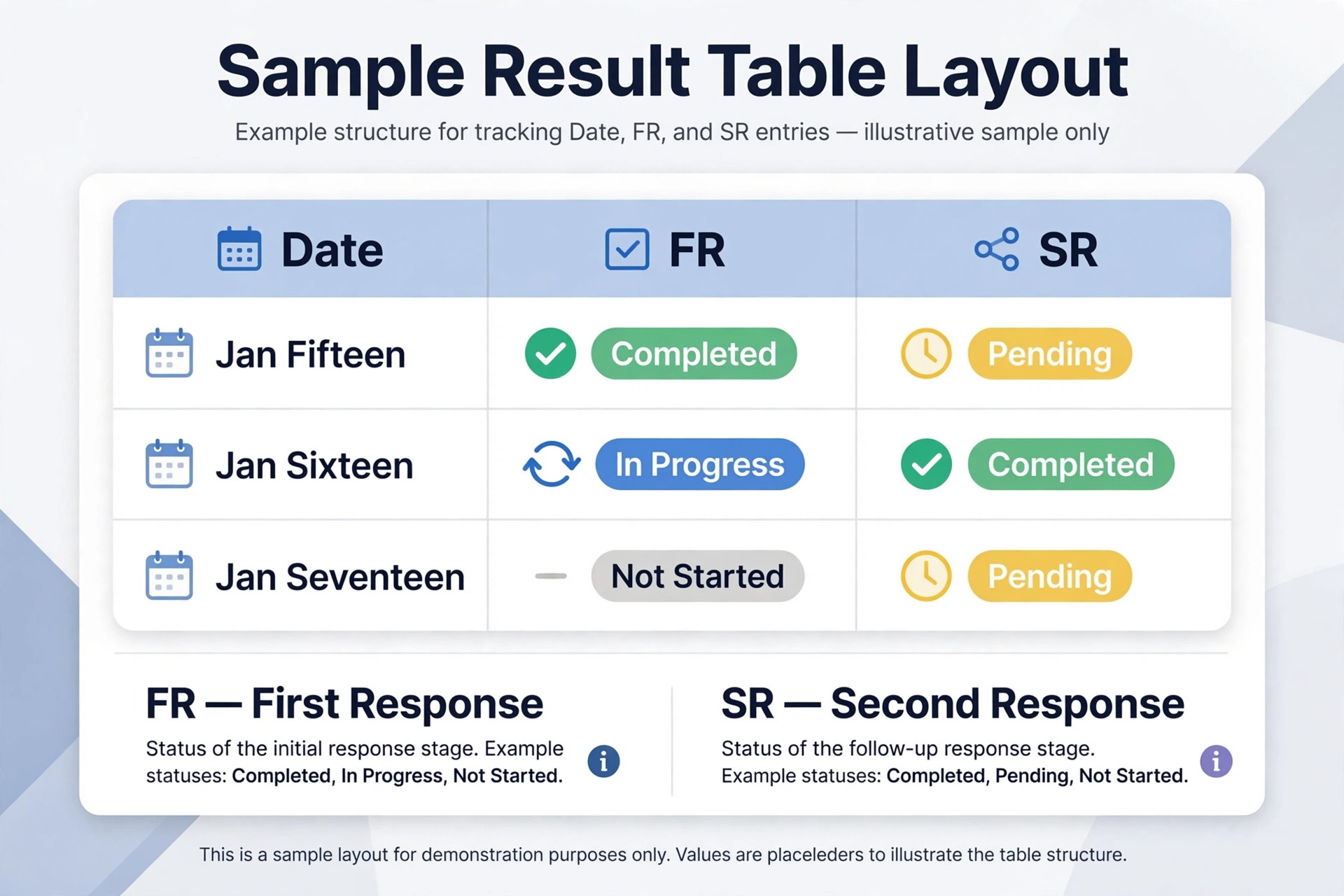
Each block shows two values: FR for the first round and SR for the second round. These are always two digit numbers, each between 00 and 99. In a live archive you would see the real declared two digit numbers in those positions, and this guide deliberately shows none, because numbers change daily and any number printed here would be outdated or, worse, mistaken for a prediction.
Some archives also keep a short history, showing the last several days of results in a table. When you open such a table, the most recent row is yesterday, with the rows above it holding the days before. Columns usually separate the markets, and within each market column the FR and SR values are shown together. Learning to read this table layout means you can confirm yesterday’s numbers in seconds.
One important detail: reputable archives mark undecided or pending sessions clearly. If a session has not yet been declared for some reason, an honest listing will show it as pending rather than filling in a guessed number. Yesterday’s record should never contain pending markers, because the entire day is already over, which is exactly why it is the most trustworthy record to consult.
How to Check Teer Result Yesterday Online
Finding yesterday’s numbers is simple when you know where to look. Follow these steps and you will land on a reliable yesterday record every time.
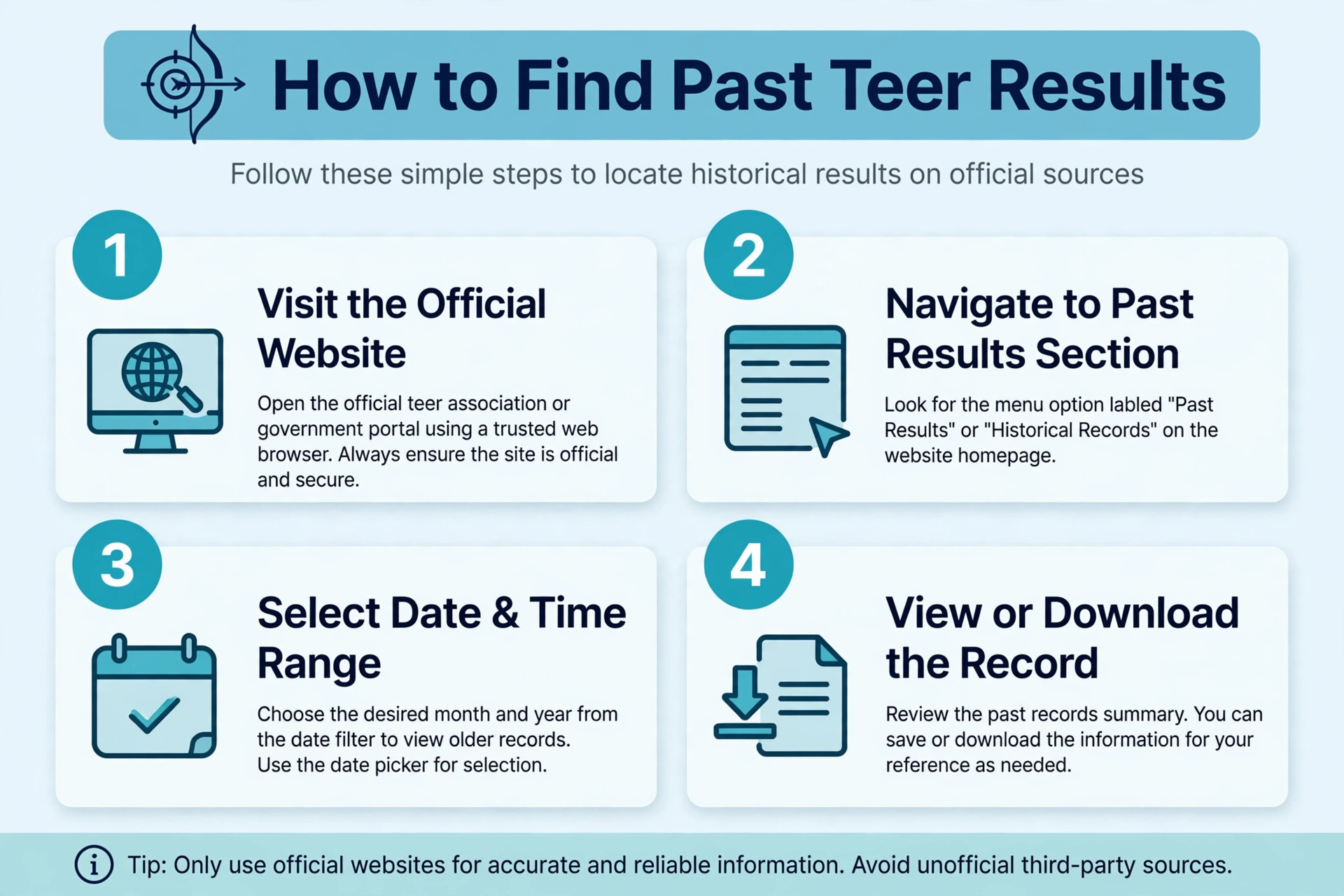
First, open a dedicated result archive. Use a result website that maintains a daily archive rather than a page that only shows today. Dedicated teer result sites keep a running list where yesterday’s numbers sit directly below today’s, which makes comparison easy. The Teer Result List page on this site keeps recent results organized by date so you can scroll back to yesterday in one glance.
Second, confirm the date at the top of the listing. Before reading any numbers, check the date label. Archives sometimes update in real time, and if you open a page just after midnight, the “today” section may already show the new day while yesterday’s numbers sit one row below. Reading the date first prevents the common mistake of reading today’s partial numbers as yesterday’s settled ones.
Third, read each market block separately. Go market by market. Read the Shillong teer result block, then the Juwai teer result block, then the Khanapara teer result block. Within each block, note the FR and SR values separately. Mixing markets is the most common reading error, especially for beginners who assume all markets share the same numbers.
Fourth, verify with a second source if the numbers matter to you. If you placed a ticket and the outcome has consequences, do not rely on a single archive. Cross check yesterday’s numbers against at least one more independent archive or the official counter record. Two archives agreeing on the same numbers is the standard that experienced followers use, and it takes less than a minute.
Shillong Teer Result Yesterday Explained
The Shillong market is the most followed teer market, so shillong teer result yesterday is also the most searched variation of yesterday queries. Yesterday’s Shillong record is usually the largest block in any archive, because it can include up to three session lines: Shillong Morning, the main Shillong afternoon session, and Shillong Night.
The main afternoon session is the one most people mean when they say Shillong result. Its FR is generally declared in the mid afternoon and its SR follows later in the same window. The morning session is declared earlier in the day, and the night session closes out the record late in the evening. When you read a yesterday listing, make sure you are looking at the session line you intend to check, because the morning, afternoon and night numbers are entirely independent of one another.
Shillong declarations are known for their consistency. On most days the declarations arrive within minutes of their usual windows, and delays are the exception. That consistency is one reason yesterday’s Shillong record is such a reliable reference: it is almost always fully settled by the next morning with no pending sessions left open.
Background reading on the game itself can help newcomers understand what they are looking at. A useful starting point is the overview of teer on Wikipedia, which describes how the archery based lottery works and where it is played.
Juwai Teer Result Yesterday Explained
The Juwai market runs parallel to Shillong with its own declaration schedule. Searching for juwai teer result yesterday returns a slightly smaller record than Shillong, because Juwai’s core following centers on its morning and afternoon sessions, though some archives also track additional session lines.
Juwai Morning FR and SR are typically declared around midday, and Juwai’s main afternoon FR and SR are declared in the afternoon window. Because the Juwai schedule is a little earlier than Shillong’s for some sessions, its yesterday record often settles slightly earlier in the day as well.
One quirk of Juwai archives is naming. Some sites label the afternoon session simply as Juwai while others write Juwai Day or Juwai Afternoon. They all mean the same main session. When you check yesterday’s Juwai record, just be consistent about which session line you are reading, and do not mix the morning line with the afternoon line.
Khanapara Teer Result Yesterday Explained
The Khanapara market is declared from Assam and followed widely across the northeast. The query khanapara teer result yesterday covers the Khanapara morning and afternoon sessions, both of which produce FR and SR numbers.
Khanapara’s schedule sits slightly earlier in the day than Shillong’s for some sessions, and its yesterday record is usually one of the first to be fully settled. Readers sometimes confuse Khanapara numbers with Shillong numbers because the markets share the same archery based format, but their declared numbers are completely separate, so always read the market label before the numbers.
Khanapara archives are also the place where players double check morning session numbers, since Khanapara Morning is one of the earlier declarations of the teer day. If you follow the morning game, yesterday’s Khanapara Morning line is the freshest reference you have until today’s morning session is declared.
Yesterday vs Previous Result vs Old Result
Three phrases that sound similar are used interchangeably in search queries, but they are worth separating.
Yesterday’s result means exactly one thing: the declared numbers of the most recent completed day. It is the freshest settled record and the most commonly needed one.
Previous result is vaguer. It can mean yesterday, but it can also mean the most recent session, the last declared round, or the last few days taken together. Many archive pages titled “previous result” actually show a rolling list of the last several days, with yesterday at the top.
Old result usually means a longer history, weeks or months back. Players who keep records use old results to study longer patterns, and archives that keep a result chart or a monthly table serve this need. Old results are historical records, nothing more. They do not carry any special predictive power, despite what some unofficial tipster pages claim.
When you search, matching your phrase to your actual need saves time. If you only need the most recent completed day, search for teer result yesterday. If you want the last week or month, look for a result list or result chart instead.
How Declaration Timings Shape Yesterday’s Numbers
Timing is the invisible backbone of every yesterday listing. Because declarations happen in waves through the day, the exact moment a session’s numbers appear depends on when the archery round finishes and when the declaration is announced.
Why timings drift slightly
Declaration windows are approximate, not exact to the minute. The archery round must finish, the count must be verified, and only then is the number announced. On busy days or during local festivals and holidays, declarations can shift by a noticeable margin. Weather and ground conditions at the archery venue can also introduce delays.
What happens on holidays
Teer is not declared every day of the year. On certain public holidays and special occasions, sessions may be cancelled or rescheduled. When that happens, a yesterday archive will show a gap or a “no result” marker for the cancelled sessions. A good archive never invents numbers to fill the gap. It marks the session as cancelled and moves on.
Sundays and special schedules
Some sessions follow a different rhythm on Sundays, with certain markets running reduced schedules or none at all. If you are checking yesterday’s record on a Monday, expect the Sunday row to look different from a weekday row. This is normal and reflects the real declared schedule, not an archive error.
How archives handle delays
Honest archives mark delayed sessions as pending until the declaration arrives, and they timestamp their updates so readers can see how fresh the page is. When you consult yesterday’s record, pending markers should be absent, because the day is over. If you still see a pending marker on a yesterday row, that signals the archive has not finished updating, and you should check again later or verify with another source.

Reading FR and SR Correctly
Every session produces two declared numbers, and confusing them is one of the most common beginner mistakes. FR stands for the first round and SR stands for the second round. They are two separate archery rounds shot one after the other, and each round’s count produces its own two digit number.
The numbers are always two digits, from 00 to 99. They are derived from the total number of arrows that hit the target, with the last two digits of that total forming the declared number. That is the whole mechanism: two rounds, two counts, two declared numbers.
For yesterday’s record, this means each market contributes a market name, an FR number, an SR number, and the date, for every session line. When someone says they want to “check yesterday’s FR,” they mean the first round number of the session they follow. Make sure you know which session’s FR you are asking about before you conclude a number is right or wrong.
Using Yesterday’s Result Responsibly
A short note on the serious side. Teer is a legal lottery in Meghalaya, regulated under the state’s lottery framework, and participation is for adults aged 18 and above only. The Meghalaya government’s official portal at meghalaya.gov.in is the authoritative source for state level information about regulated activities in the state.
Yesterday’s results are records of a lottery that has already happened. They describe the past, and they cannot tell you what tomorrow’s numbers will be. Any website or message that presents yesterday’s numbers as clues to future winning numbers is selling prediction content, which this site does not provide and does not endorse.
If you play, play responsibly. Set a budget you can afford, never chase losses, and treat teer as entertainment rather than income. If gambling ever stops feeling like a game, step back and seek support.
Common Mistakes When Checking Yesterday’s Teer Result
Even experienced followers make these errors from time to time, and beginners make them constantly. Knowing them in advance keeps your reading accurate.
The first mistake is reading today’s partial numbers as yesterday’s. Early in the morning, archives update to the new day, and only the sessions declared so far are visible. A reader in a hurry may read the new day’s morning numbers and believe they are yesterday’s. Always check the date label first.
The second mistake is mixing up markets. Shillong, Juwai and Khanapara each have their own FR and SR, and the numbers are not interchangeable. A player who follows Juwai but reads the Shillong block will walk away with the wrong numbers.
The third mistake is mixing up FR and SR within the same market. The two rounds are separate, and tickets are typically round specific. Reading the SR value when your ticket was for the FR round produces a false result.
The fourth mistake is trusting a screenshot. Social media and messaging groups circulate result screenshots that can be outdated, edited, or cropped to remove the date. Always confirm against a live archive with a visible date before treating numbers as confirmed.
The fifth mistake is assuming yesterday’s numbers repeat. Each day’s declarations are independent. Yesterday’s FR has no mechanical influence on today’s FR. Keeping records is fine for entertainment, but building expectations on repetition is a misunderstanding of how lotteries work.
How Archives Store Yesterday’s Numbers Over Time
Yesterday does not stay yesterday for long. At midnight, yesterday’s record becomes the day before yesterday, and today’s numbers take its place. Archives handle this rollover in a few standard ways.
Most archives keep a rolling window, often the last seven to thirty days, displayed as a table with the newest row at the top. Older rows fall off the bottom as new days are added. This rolling list is what most people mean when they say “previous results,” and it is the most useful view for anyone comparing yesterday with the days around it.
Some archives also keep monthly pages, where every day of a given month sits in one table. These are useful for longer record keeping and for spotting how declarations behaved around holidays and special schedules.
A few archives offer downloadable or printable lists. If you maintain a personal record, exporting or printing the archive’s monthly table is more reliable than copying numbers by hand, which invites transcription errors.
Whatever the format, the discipline is the same: the archive should preserve the declared numbers exactly as announced, dated correctly, with no invented values and no silent edits. That discipline is what makes yesterday’s record worth consulting.

Tips for Keeping Your Own Yesterday Record
If you check yesterday’s numbers regularly, a small personal system saves effort and prevents mistakes.
Write down the date first, in full, every single time. A notebook full of number pairs without dates is useless within a week. Include the market name and the session, morning, afternoon or night, beside each pair, and keep FR and SR in separate columns.
Update your record at a fixed time each day. The best time is after the night session of the current day is declared, or first thing the following morning, when yesterday’s record is fully settled. Updating midday risks capturing an incomplete today row instead of a settled yesterday row.
Cross check your entries monthly against the archive’s monthly table. A five minute review catches transcription errors before they accumulate.
Finally, keep your record for what it is: a personal log of past lottery outcomes. Resist the temptation to turn it into a prediction system. Lotteries are designed so that each draw is independent, and no pattern in yesterday’s numbers changes that.
Frequently Asked Questions
Where can I find teer result yesterday online?
You can find yesterday’s teer result on dedicated teer result websites that maintain daily archives. Look for a result list page where recent days are shown in a table with the date at the top of each row. Yesterday’s numbers are the most recent fully settled row, directly below today’s row if today has begun.
What is included in yesterday’s teer result?
Yesterday’s result includes the declared FR and SR numbers for each market and each session of the previous day. That usually means Shillong Morning, the Shillong main session, Shillong Night, Juwai Morning, the Juwai main session, Khanapara Morning and the Khanapara main session, each with its own FR and SR pair, all dated with yesterday’s date.
Is shillong teer result yesterday different from today’s result?
Yes. Yesterday’s record covers the completed previous day, while today’s record is still being declared through the day. Early in the morning, today’s row may only show the morning sessions, while yesterday’s row is complete. Always confirm the date label before reading numbers.
Why do some archives show pending on yesterday’s row?
A yesterday row should be fully settled. If you see a pending marker on it, the archive has not finished updating, a session was delayed, or a session was cancelled for a holiday. Check back later or verify with a second archive. Do not treat pending sessions as numbers.
Can yesterday’s teer result predict today’s numbers?
No. Teer is a lottery, and each round’s declared number is independent of previous rounds. Yesterday’s results are historical records. They are useful for record keeping and verification, but they cannot predict future outcomes. Any claim otherwise is prediction content, which has no basis in how the game works.
What should I do if yesterday’s numbers differ between two archives?
Treat the mismatch as unresolved until you can verify further. Check a third archive, look at the update timestamps on each page, and confirm you are reading the same market and session on both sites. Date mixups and market mixups cause most apparent disagreements. If the numbers truly differ after careful checking, rely on the source with the clearest timestamping and the longest consistent history.
When is the best time to check yesterday’s teer result?
First thing in the morning is ideal. By then the previous day is fully complete, including the night sessions, so yesterday’s record is settled and stable. There is no need to refresh repeatedly. Yesterday is finished and its numbers are fixed, so one careful read is enough.
Conclusion
Checking teer result yesterday is one of the simplest habits in the teer world, and also one of the most useful. Yesterday’s record is the freshest fully settled set of declared numbers you have: every session of the previous day is complete, every FR and SR is known, and the date is unambiguous. Whether you missed a session, are verifying numbers you heard elsewhere, or are keeping a personal log, yesterday’s numbers give you a clean, trustworthy reference.
The habits that keep your reading accurate are small: check the date first, read each market and session separately, keep FR and SR in their own columns, and verify against a second source when the outcome matters. Combined with a realistic understanding that past results describe history rather than predict the future, these habits make yesterday’s result exactly what it should be, a reliable record of a game you enjoy. Remember that teer is a legal lottery in Meghalaya for adults 18 and above, and always play responsibly.