If you have ever refreshed a result page again and again, waiting for the numbers to appear, you already know the frustration of a teer result delayed beyond its usual time. You expected the result by the afternoon, but the clock kept moving and the page still showed yesterday’s figures or an empty slot. Before you assume something is wrong, it helps to understand what actually happens on the archery ground between the last arrow being shot and the moment a result is published. A teer result is not generated by a computer at the click of a button. It is the outcome of a live sporting event where real archers shoot real arrows at a target, and every single arrow that lands must be counted, checked, and verified by hand. That human process is honest and transparent, but it is also slow, and almost every delay you will ever see traces back to it.
This guide explains the full journey of a teer result, from the shooting session to the official announcement, and shows exactly why a teer result delayed by thirty minutes, one hour, or even more is usually a sign that the process is working properly rather than a sign of trouble. You will learn how the first round (FR) and second round (SR) work, why counting hundreds of arrows takes real time, what happens during recounts, how weather and light affect the schedule, and how the official declaration chain moves information from the ground to published result pages. You will also learn how to tell the difference between a result that is simply late and one that has not been declared at all, plus what to do while you wait so you do not fall for fake numbers posted by unreliable sources.

Teer Result Delayed – What It Really Means
When people say the teer result is delayed, they usually mean one simple thing. The result has not appeared yet at the time they expected it. Every regular player develops a mental schedule. The first round result typically arrives in the afternoon, and the second round result follows in the evening. Morning markets have their own rhythm, with results landing in the late morning and early afternoon, and night teer sessions conclude in the evening hours. When those familiar times pass without an update, the result feels late, and the natural reaction is to worry.
A teer result delayed by a few minutes is completely normal and happens almost every day somewhere. The counting and verification process does not run on a stopwatch. It finishes when it finishes, and small variations in timing are built into the event. A delay of fifteen to forty-five minutes is within the ordinary range for any market, including Shillong, Juwai, and Khanapara. Longer delays of an hour or more are less common but still have ordinary explanations, such as a recount, a weather interruption, or a very large number of arrows to count. In almost all cases, the result does arrive on the same day, just later than the rough time players are used to.
It is also worth knowing that there is no single fixed minute at which a result must be declared. The timings you see on result websites are typical declaration windows based on past sessions, not official guarantees. The ground officials declare the result when the counting and verification are genuinely complete, not when a clock strikes a particular number. Keeping that in mind makes waiting much easier, because you stop measuring the delay against a false deadline and start seeing it as the natural pace of a live event.
How Teer Archery Works Before Any Result Exists
To understand delays, you first need to understand the event itself. Teer is a traditional archery based lottery played in Meghalaya, and the result is decided by a genuine sporting contest, not by a draw machine or a random number generator. Understanding this is the key to everything that follows, because the sport is what makes the result possible and the sport is also what makes it slow.
The Shooting Session
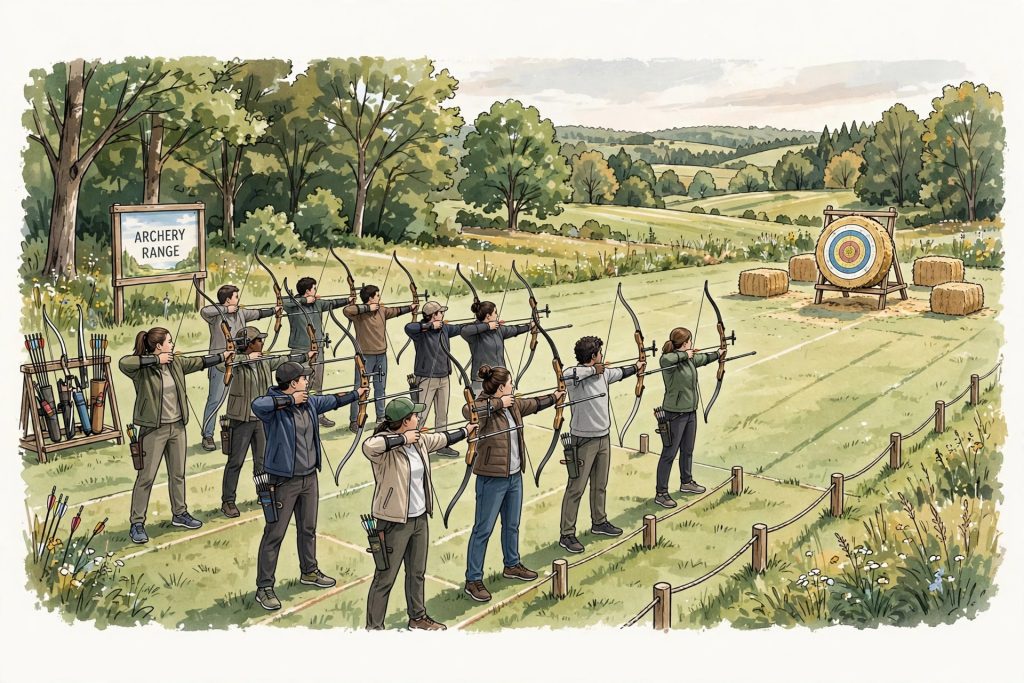
Each day, at the archery ground, a group of archers gathers with their traditional bows and arrows. They stand at a fixed distance from a large round target, usually made of straw or a similar material that can hold arrows. When the session begins, the archers shoot their arrows at the target over a set period. Dozens of archers may take part, and each archer shoots multiple arrows, so by the end of a round, the target can hold a very large number of arrows. Hundreds of arrows sticking out of a single target is a normal sight.
The atmosphere on the ground is organized and supervised. Officials are present to manage the session, watch the shooting, and make sure everything follows the rules. Spectators and ticket holders watch from designated areas. The shooting itself is the exciting part for the crowd, but from the perspective of the result, the shooting is only step one. Nothing is known yet. The arrows are simply in the target, waiting to be counted.
The First Round (FR)
The first round, known as FR, is the opening shooting session of the day for a market. Archers shoot their allotted arrows, and when the round ends, the counting begins. The result of the FR is derived from the total number of arrows that hit the target in this round. Players who follow the game know the FR result as the first number published for the day, and it is usually declared in the afternoon for the main markets. Morning markets hold their FR earlier, with results in the late morning, and night teer holds its sessions in the evening.
The Second Round (SR)
The second round, known as SR, follows the same format as the first. A fresh shooting session takes place, a fresh set of arrows is shot at the target, and the counting starts again from zero. The SR result is a separate number, declared separately, usually in the evening for the main markets. Because the entire cycle of shooting, counting, and verification repeats, the SR result can be delayed for all the same reasons as the FR result, and sometimes both rounds of the same day run late if the ground faces a difficult session.
Inside the Counting Process That Causes Most Delays
Here is the heart of the matter. Once the arrows have been shot, officials must determine exactly how many arrows hit the target. This sounds simple, but in practice it is a careful manual task, and it is the single biggest reason for a teer result delayed beyond its usual time.
Hundreds of Arrows, Counted One by One
Imagine a straw target with several hundred arrows stuck into it at different angles, some clustered tightly in the center, some near the edges, some overlapping each other. Officials must count every arrow that counts as a hit. There is no machine that does this. People walk up to the target, examine it section by section, and count. When arrows overlap or sit very close together, the counters must be extra careful not to count one arrow twice or to miss one hidden behind another. This kind of careful work simply takes time, and the more arrows in the target, the longer it takes.
The number of arrows varies from day to day depending on how many archers participated and how many arrows each one shot. On a busy day with a full lineup of archers, the target can be extremely crowded, and the counting can stretch well beyond its normal duration. On such days, a teer result late by half an hour or more is the direct and honest result of more work, not of any problem.
Recounts When the Numbers Do Not Match
Counting is often done more than once to make sure the total is correct. If two counts produce different totals, or if an official spots something unusual during the count, a recount is ordered. A recount means the whole careful process starts again, and the declaration waits until the recount is finished and the totals agree. This is exactly how a fair system should behave. Rushing out a number that might be wrong would be far worse than waiting for a number that is right.
Recounts are one of the most common causes of longer delays. A single recount can add a significant amount of time to the process, especially on a crowded target. When you see a teer result delayed by an hour or more, a recount is one of the first explanations to consider, and it is a healthy sign that the officials are doing their job properly.
Marking and Verifying Each Hit
Beyond simple counting, officials must decide which arrows count as hits. Arrows that strike the target face count, while arrows that miss entirely or fall short do not. Near the edges of the target, judgments have to be made carefully. Officials may mark arrows as they count to keep track, and supervisors verify the work. This layered checking is what makes the published result trustworthy, and each layer adds a few more minutes. Players sometimes forget that trust has a time cost. The verification you rely on when you check your ticket is the same verification that keeps you waiting.
Why Is the Teer Result Delayed? The Full List of Causes
Now that you understand the counting process, here is the complete picture of everything that can slow a result down. Most delays come from one of these causes, and many days involve a combination of two or three.

Weather Interruptions and Poor Light
Teer is an outdoor sport, and the weather in Meghalaya can change quickly, especially during the monsoon months. Heavy rain can make shooting difficult or unsafe, and officials may pause the session until conditions improve. A paused session means everything downstream shifts later, including the counting and the declaration. Strong wind can also affect shooting and may slow the session. Even on a dry day, fading light in the evening can make counting harder and slower, since officials need to see every arrow clearly to count it accurately.
Weather delays are nobody’s fault and cannot be predicted precisely. If the sky opens up over the archery ground in the afternoon, the FR result of that day may easily arrive much later than usual. The same applies to evening sessions caught by sudden showers. When rain is the cause, the delay usually resolves itself once the weather clears and the officials complete the remaining work.
Late Sessions and Large Archer Turnouts
Sometimes the shooting session itself starts later than usual. Transport issues, ground preparation, or organizational matters can push the start time back, and every minute lost at the start is a minute added to the declaration time. A late start is a simple and common cause of a teer result delayed into the later part of its window.
Large turnouts have a similar effect. More archers mean more arrows, and more arrows mean more counting. Festival days, weekends, and special occasions can draw bigger crowds to the ground, and the counting workload grows with them. If you notice that results are late on a day when the ground was unusually busy, the connection is direct.
Technical and Communication Gaps
After the ground officials finalize the number, it must travel from the archery ground to the people who publish it. This communication chain usually works smoothly, but it can hit snags. A phone network problem, a delay in the official announcement reaching the publishing point, or a slow update on a result website can each add minutes. These gaps are usually short, but they stack on top of any counting delay, so the final published time can feel later than the groundwork alone would explain.
It is important to separate these two stages. The official declaration happens at the ground when counting and verification finish. Publication on websites happens after that. A result can be officially declared on time at the ground and still appear late on your screen if the publishing step is slow. Result websites, including this one, publish as fast as the confirmed information reaches them.
Shillong Teer Result Delay – Market Specifics
The Shillong market is the most followed teer market, which means a Shillong teer result delay is also the most noticed. Shillong typically runs its FR in the afternoon and its SR in the evening, and players watch those windows closely. Because the Shillong ground hosts a large number of archers, its targets are often among the most crowded, and its counting sessions can run long on busy days. If any market is going to experience a teer result delayed by counting volume alone, Shillong is a strong candidate.
Shillong is also affected by the same weather patterns as the rest of the region. Afternoon showers are common in the rainy season, and they frequently interrupt or slow the FR session. Evening light fades fast, which can make the SR counting session trickier on overcast days. None of this is unusual, and regular Shillong followers learn to allow extra time on rainy days rather than worrying.
For the latest confirmed Shillong numbers and timing updates, the dedicated Shillong teer result page carries the day’s declared figures as soon as they are confirmed, and the complete teer result list keeps the recent history in one place so you can see the usual declaration pattern for yourself.

Juwai Teer Result Late – Market Specifics
Juwai runs its own archery sessions with its own archers and its own counting team, and a Juwai teer result late by some margin follows the same logic as anywhere else. The shooting happens, the arrows are counted by hand, verification takes place, and the number is declared. Juwai’s schedule includes its regular afternoon and evening rounds, and players who follow Juwai develop expectations around those windows just as Shillong followers do.
One thing to remember about Juwai is that it is a separate ground with separate conditions. A delay in Shillong does not automatically mean a delay in Juwai, and vice versa. Each market’s timing depends on its own session, its own weather, and its own counting workload that day. If you follow both markets, check each one on its own page rather than assuming they move together. The Juwai teer result page publishes the confirmed Juwai figures for the day, and the Khanapara teer result page covers the Khanapara market for players who track more than one ground.

Teer Result Not Declared vs Teer Result Pending – How to Tell the Difference
Players often mix up two different situations, and the distinction matters while you wait. A teer result delayed is not the same as a teer result not declared, and knowing which one you are looking at changes what you should do.
A result that is pending, or simply late, means the session has happened or is happening, and the counting and verification are still in progress. The result exists in the sense that the arrows have been shot, but the final confirmed number has not finished its journey yet. This is the normal waiting situation, and patience is the right response. Most of the time, when players say the teer result is late, this is what they mean.
A teer result not declared is a different situation. It means no result has been officially announced for that round at all. This can happen on days when no session takes place, such as Sundays or public holidays when the archery grounds are closed. On such days, waiting is pointless because there is nothing to wait for. The schedule itself tells you this in advance if you check it.
How to Read the Status on a Result Page
A well maintained result page makes the distinction clear. If the page shows the previous session’s numbers with today’s date slot empty, the result is pending and you should check back later. If the page or the schedule notes that there is no game on a particular day, then the result is not declared because no session was held. When in doubt, look at the recent history on the complete teer result list. If every recent day shows results and only today is blank, the delay is almost certainly just a late declaration in progress.
What to Do When the Teer Result Is Late
Waiting is easier when you have a plan. Here is a practical approach for the next time you face a teer result delayed beyond its usual time.
Check Back After the Usual Window
Give the process room to finish. If the result is typically out by a certain part of the afternoon or evening, allow at least an hour beyond that before you start worrying. Refresh the result page at intervals rather than constantly, and keep an eye on the official pattern from previous days. Same day arrival is the norm, and the overwhelming majority of late results do appear before the day ends.
Ignore Fake Numbers and Prediction Posts
Delays create a vacuum, and unfortunately some websites and social media pages fill that vacuum with invented numbers. Treat any number that appears before the official declaration with deep suspicion, especially if it comes from a source with no track record. No one can know the result before the counting is finished, because the result does not exist until the counting is finished. Anyone publishing a number during a delay is guessing or inventing, and acting on such numbers is a fast way to lose money.
This is also a good moment to repeat a standing rule for yourself. Never trust common number posts, hit number claims, or target number tips, whether the result is on time or late. Teer outcomes are decided by live archery, and no prediction method can change or foresee the count. Stick to confirmed results from sources that wait for the official declaration, and ignore everything else.

Frequently Asked Questions About Teer Result Delayed
Why is the teer result delayed today?
The most common reasons are a long manual counting session, a recount ordered to verify the total, a weather interruption such as rain, a late start to the shooting session, or a large number of archers producing more arrows to count. Any one of these can push the declaration back by minutes or hours. In almost all cases the result still arrives the same day once the officials complete their work.
How long can a teer result be delayed?
Short delays of fifteen to forty five minutes are routine and happen regularly. Delays of an hour or more are less common but still normal when a recount or weather interruption is involved. There is no fixed maximum, because the officials declare the result when the counting and verification are genuinely complete rather than at a preset minute. If the ground held its session, the result almost always follows the same day.
What does teer result pending mean?
A pending status means the shooting session has taken place and the result is working its way through counting, verification, and declaration. It is the normal in progress state, not an error. Keep checking back at intervals, and the confirmed number will appear once the officials finalize it and the information reaches the publishing point.
Why is the Shillong teer result delayed more often than other markets?
Shillong draws the largest crowds and the most attention, so its delays are simply noticed more. Its ground also hosts a large number of archers, which means crowded targets and longer counting sessions on busy days. The causes are the same everywhere, but Shillong’s scale makes the ordinary variation in timing more visible to more people.
What should I do if the Juwai teer result is late?
Treat it the same as any other market. Allow extra time beyond the usual window, check the dedicated result page at intervals, and do not trust numbers posted by unofficial sources during the wait. Juwai runs its own sessions independently, so a delay there has its own local cause, usually counting volume, a recount, or weather, and it resolves the same way.
Can a teer result be delayed until the next day?
This is extremely rare for a session that actually took place. If the archers shot and the counting began, the declaration normally follows the same day. A result that never appears usually means no session was held that day, for example on a Sunday or a public holiday, rather than a delay carrying over. Checking the schedule for non playing days clears up most of these cases.
Conclusion
A teer result delayed is, in the vast majority of cases, simply the visible pace of a fair manual process. Real archers shoot real arrows, real officials count them by hand, recounts happen when totals need checking, and weather sometimes intervenes. Each of these steps protects the integrity of the number you eventually see, and each of them takes time. The next time the result runs late, you will know exactly where those minutes are going, and you can wait with confidence instead of worry.
For confirmed numbers, always rely on pages that publish only after the official declaration. The View Teer Result homepage brings together the latest updates across markets, and the complete teer result list lets you review recent declarations and their usual timing pattern.
Teer is a legal lottery in Meghalaya, run under the applicable state regulations. It is meant strictly for adults aged 18 and above. If you choose to play, do so responsibly, set limits you can afford, and never chase losses. For background on the sport itself, see the overview of archery on Wikipedia, and for official state information visit meghalaya.gov.in.