Timing is everything when you follow the Khanapara Morning Teer result. The numbers are declared in two rounds every morning, and each round has its usual window. Readers who understand the daily timeline check once, see the numbers, and move on with their day. Readers who do not understand it refresh pages anxiously or mistake one session for another. This guide is a complete walkthrough of the morning schedule: the order of events from ticket sale to the second round declaration, the usual times for FR and SR, the reasons timings shift, and a simple routine that covers the whole session with two quick checks.

The Daily Timeline of the Khanapara Morning Teer Result
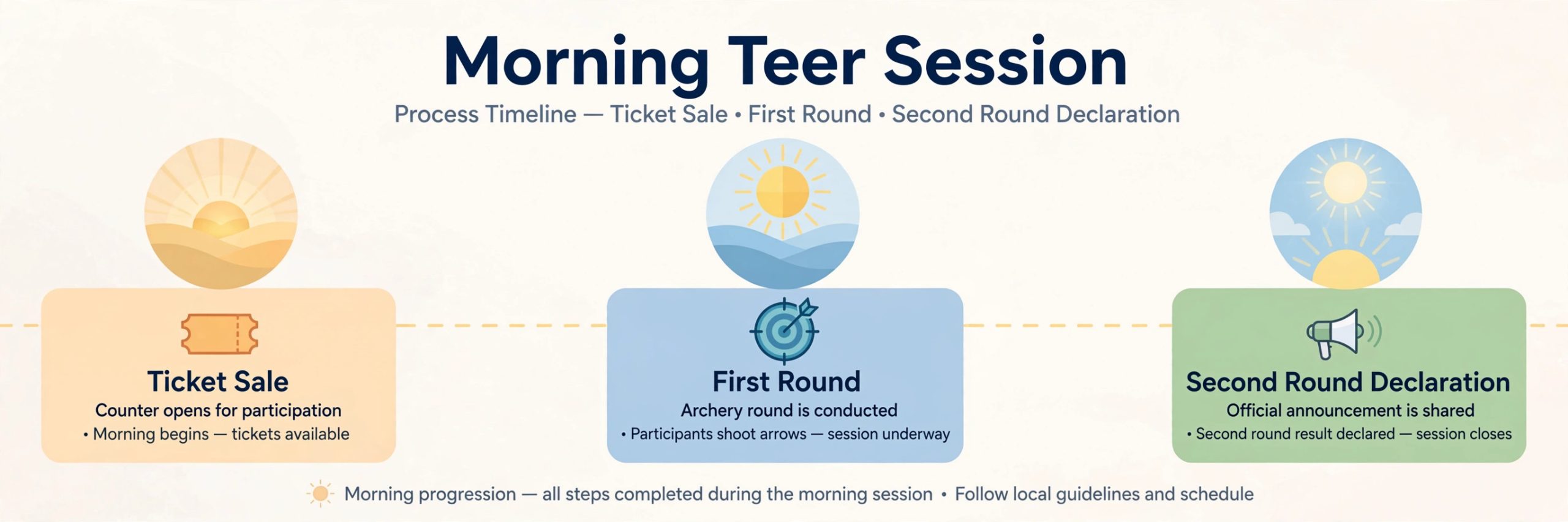
Every morning at Khanapara follows the same sequence of events. It begins well before any number is declared. Licensed counters sell tickets carrying two digit numbers from 00 to 99. Ticket sale for the first round closes before shooting begins, because no new entries can be accepted once the archers start. The archers then shoot their arrows at the target in the first round. Officials count the arrows that hit, take the last two digits of the count, and that becomes the FR number. After an interval, the whole cycle repeats for the second round: ticket sale closes, shooting, counting, and the SR declaration. The session is complete before midday on most days.
This fixed order is what makes the Khanapara Morning Teer result predictable. You will never see the SR number declared before the FR number, because the rounds happen in sequence at the venue. You will never see either number before the shooting for that round is finished. Understanding this order protects you from fake early numbers: any message claiming the SR number while the FR round is still in progress cannot be genuine.
The timeline also explains why result websites show the two numbers appearing at different times. A good result page updates the FR value first and the SR value later, each as soon as it is confirmed. The Khanapara morning session page on this site follows exactly that pattern, so what you see mirrors what happened at the venue, step by step.
Usual Declaration Windows for FR and SR
On a normal day, the first round number is declared late in the morning, typically around 11:00 AM Indian time. The second round number follows roughly an hour later, typically around 12:00 noon. Think of these as windows rather than appointments. The archery is a live outdoor event, so the precise minute moves a little from day to day. Most readers find the FR number posted when they check around 11:00 AM and the SR number posted when they check around noon.
The First Round Window
Shooting for the first round usually starts mid morning. The round itself takes a defined amount of time: the archers shoot, then officials count. Counting must be careful because the winning number depends on it, so it is never rushed. Once counting ends, the number is announced at the venue and reaches result websites within minutes. If you open the result page at 11:00 AM and see only a dash where the FR number should be, the round is simply still in progress. Give it a little time.
The Interval Between Rounds
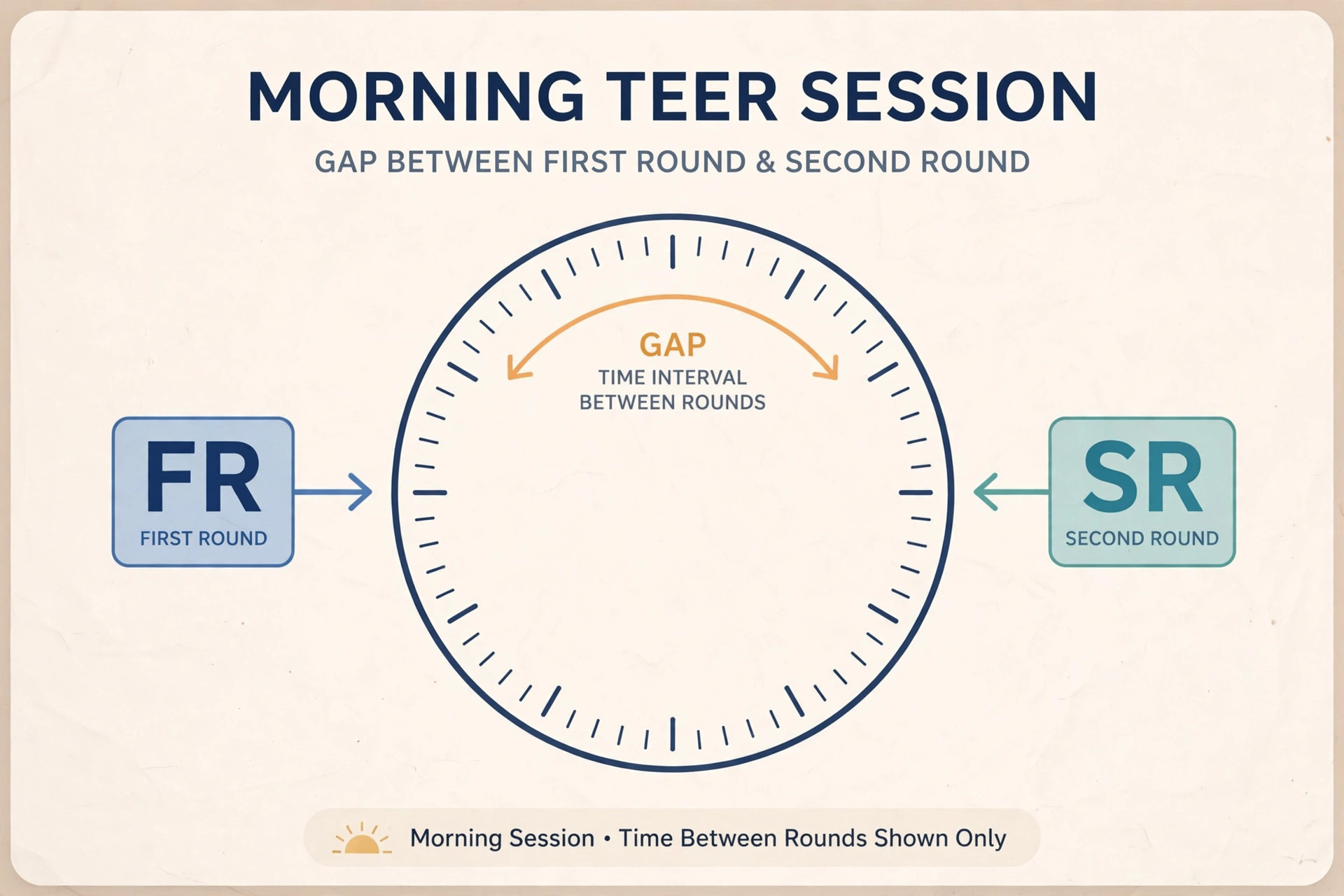
Between the two rounds there is always a break. The archers rest, officials finish the first round paperwork, and ticket sale for the second round closes. This interval is part of the design of the game, not dead time. It is also the reason the SR number cannot appear immediately after the FR number. Expect roughly an hour between the two declarations on a normal day. The gap is consistent enough that experienced readers use the FR declaration as their cue: once FR is out, SR is about an hour away.
The Second Round Window
The second round repeats the same steps: shooting, counting, declaration. Its number is usually out around 12:00 noon. By early afternoon the whole morning session is history and the page shows both numbers for the day. Readers who prefer a single daily check can simply look once after noon and see the complete Khanapara Morning Teer result in one glance.
What Moves the Exact Minute
Several ordinary factors shift the declaration by a few minutes in either direction. Weather is the biggest. Archery is played outdoors, and rain or poor light slows or pauses shooting. During the monsoon months, small delays are routine and nobody at the venue treats them as unusual. The pace of a particular round also matters: some rounds finish briskly, others take longer, depending on the number of archers and arrows in that round.
Counting is another factor. Officials count every hitting arrow, and accuracy matters more than speed. A careful count that takes a few extra minutes is far better than a rushed one. Technical pauses, such as equipment checks at the venue, can add a few minutes as well. None of these change the result itself. They only move the moment it appears online. A number declared at 11:08 instead of 11:00 is just as valid as one declared on the hour.
What should never move is the order: FR first, SR second, each after its own shooting. If you ever see a source showing both numbers long before the usual windows, treat it with suspicion and wait for confirmation on a trusted result page. Genuine numbers follow the genuine timeline.
Result Date Versus Update Time
One detail that confuses beginners is the difference between the result date and the update time shown on result pages. The result date is the day the session was held, for example today. The update time is when the website last refreshed its data, which may be minutes after the declaration. Both pieces of information are useful. The date tells you which day the numbers belong to, and the update time tells you how fresh the page is.
Always match the result date to today before noting any numbers. If you open the page early in the morning, it may briefly still show the previous day until the new session begins. That is normal. The page rolls over as the new day’s session progresses. Checking the date takes two seconds and prevents the most common error in reading results: copying the previous day’s numbers by mistake.
A Two Check Routine for the Khanapara Morning Teer Result
You do not need to watch the result page all morning. A simple routine covers the session on nearly every day. First check: around 11:00 AM, look for the FR number. If it is there, note it; if it shows a dash, the round is still going and you can check again shortly. Second check: around 12:00 noon or a little after, look for the SR number. By this point both numbers are usually declared, and you have the complete Khanapara Morning Teer result.
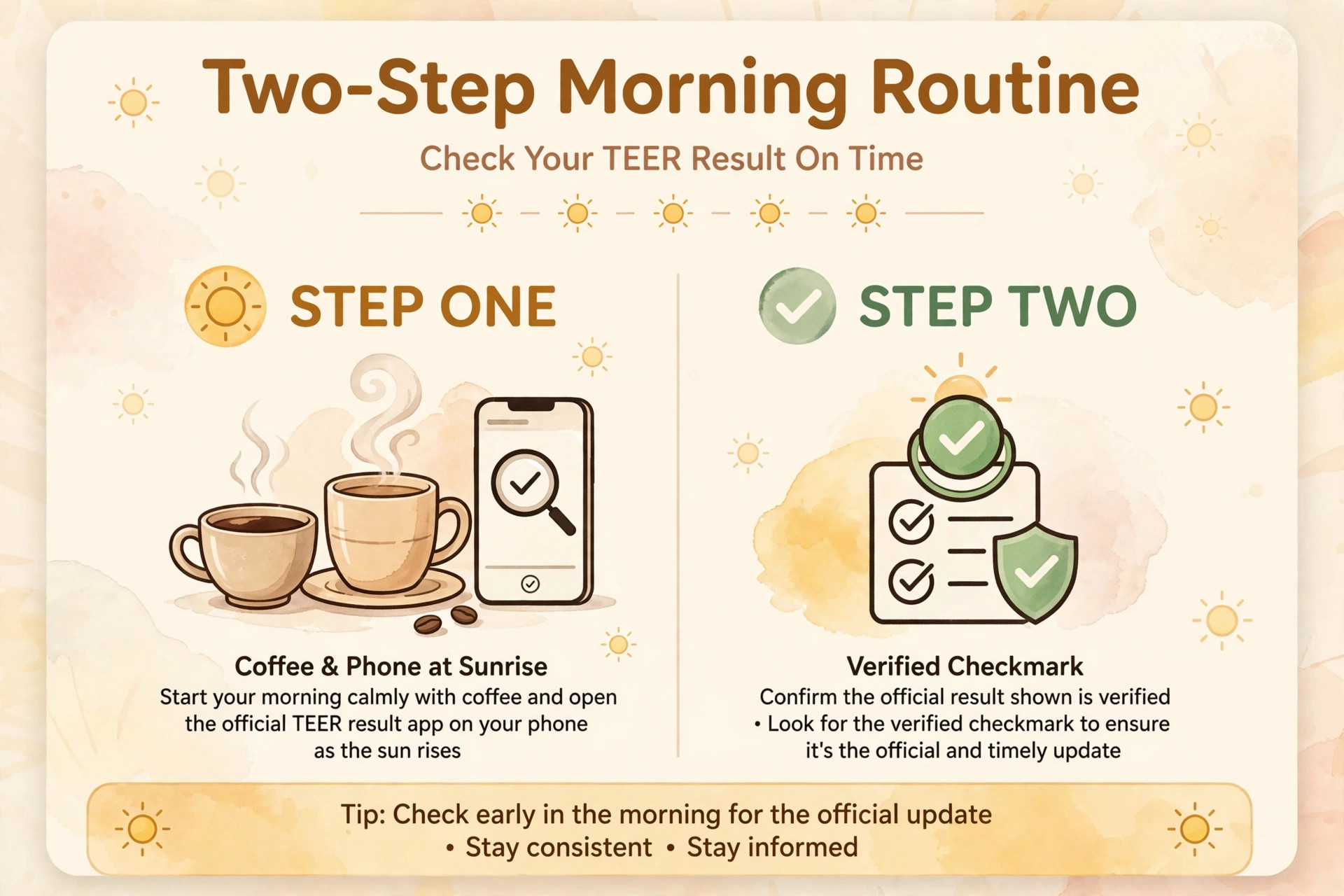
This routine works because it aligns with the venue’s own rhythm. Checking far outside the windows, for example at 8:00 AM expecting numbers, only leads to disappointment, because the archery has not happened yet. Checking once in the evening also works if you simply want the final numbers, since the morning session is long finished by then. Choose whichever pattern fits your day; the numbers wait for you either way.
For readers who follow the whole day’s teer calendar, the morning session is just the start. The afternoon sessions at Juwai, Shillong and Khanapara follow later, each with its own FR and SR windows, and the night sessions close the day. The full result list keeps every session together, so you can move from the morning numbers to the afternoon ones without hunting across pages.
How the Morning Session Fits the Full Day
The teer day is a chain of separate sessions, and the morning session is the first link. After the Khanapara morning rounds finish around noon, the afternoon sessions take over at their venues. Each session is independent, with its own tickets and its own numbers. The morning result has no influence on the afternoon result, and the afternoon result has no influence on the night result.
This separation is worth stressing because beginners sometimes assume the day’s numbers are connected. They are not. Each round at each venue is a fresh archery event. The FR number of the Khanapara morning session tells you nothing about the SR number of the same session, and nothing at all about any other session. Keep each result in its own box: venue, session, round, date. Four labels, and the number belongs to exactly one combination.
If you follow multiple sessions, give each its own check time. The morning routine above covers Khanapara morning. The afternoon sessions have their own mid afternoon windows, and the night sessions declare in the evening. Spreading your checks across the day in this way is calmer and more accurate than trying to catch everything at once.
When the Schedule Slips
Delays are a normal part of a live outdoor sport. When rain interrupts shooting, the round pauses and resumes when conditions allow. The declaration then shifts later by roughly the length of the pause. A delay in the first round pushes the second round later too, since the rounds run in order. On such days you may see the FR number appear close to noon and the SR number in the early afternoon.
Result pages handle delays by showing a dash or a brief note until the confirmed number arrives. That dash is honest: it means not yet declared. Be wary of any unofficial source that produces numbers during a delay. The genuine numbers can only come after the shooting and counting are done, so anything circulating earlier is guesswork. Patience is the correct strategy, and the confirmed numbers always appear once the round completes.
Long delays are rare. Most delays resolve within the morning, and the session completes the same day. In the unusual event of a session being disrupted badly, official announcements at the venue govern what happens next, and result websites reflect those announcements. There is nothing a reader needs to do except wait for the confirmed update.
Fairness of the Rounds
Some readers wonder whether the timing of their check affects anything. It does not. The numbers are decided by arrows hitting a target at the venue, counted by officials. Whether you check at 11:00 AM sharp or at 6:00 PM, the declared numbers are identical. Checking earlier gives you no advantage and checking later costs you nothing. The result is fixed the moment counting ends.
Similarly, the website you use does not change the numbers. Every honest result site republishes the same venue declaration. Differences between sites, when they occur, are about update speed, not about different numbers. That is why the verification habit matters more than the choice of site: session label, date, round labels, in that order. With those three confirmed, the numbers you read are the numbers that were declared.
How Result Websites Publish the Numbers So Quickly
Readers sometimes wonder how a number shot at a venue reaches a website within minutes. The chain is short. The declaration is made at the venue the moment counting ends. Reporters and agents present at the venue relay the number immediately, and result websites update their pages as soon as the figure is confirmed. The whole relay usually takes only a few minutes, which is why the FR number can appear online close to its declaration window.
This speed is convenient, but it also explains occasional brief mismatches between websites. If two sites update a minute apart, one may show the new number while the other still shows a dash. Both are honest; they are just at slightly different points in the relay. Waiting a few minutes resolves it. What you should never see is two trusted sites showing different numbers for the same round after both have updated. If that ever happens, wait for the correction rather than picking one, because one of them received a wrong relay and will fix it shortly.
The relay also explains why screenshots go stale. A screenshot captures one moment in the relay, but the live page keeps moving. By the time a screenshot travels through a chat group, the live page may have added the SR number or rolled to the next update. Always prefer the live page with its date and update time over any static image. The live page is the end of the relay; the screenshot is a frozen middle.
Responsible Reading
Teer is a legal lottery in Meghalaya, run under state regulation by the Meghalaya state government, and it is intended for adults aged 18 and above. Following the Khanapara Morning Teer result as a daily ritual costs nothing and many readers enjoy it purely as spectators. If you also participate by buying tickets, decide your budget in advance, never chase losses, and keep it strictly within entertainment spending. Background on the game is available on Wikipedia, which describes teer as an archery based lottery of the region.
Frequently Asked Questions
What time is the Khanapara Morning Teer result declared?
The first round is usually declared around 11:00 AM and the second round around 12:00 noon, Indian time. These are approximate windows because the rounds depend on live archery.
Which comes first, FR or SR?
FR (first round) is always declared before SR (second round). The rounds happen in sequence at the venue, so the order never reverses.
Why is only one number showing on the result page?
The other round has not been declared yet. A dash marks the pending round. Check back after the usual window for that round.
Do morning session timings change on Sundays or holidays?
The session generally follows the same daily pattern, but local holidays or venue conditions can occasionally shift things. The result page reflects whatever is declared that day.
Can I check the morning result in the evening?
Yes. The numbers remain published for the day, so an evening check shows the same FR and SR numbers that were declared in the morning.
Why was today’s result later than usual?
Most likely weather or a slower round at the venue. Short delays are normal, especially in the monsoon season, and the numbers appear once counting is complete.
Does checking earlier or later change anything?
No. The numbers are fixed when counting ends at the venue. Your check time only affects when you see them, not what they are.
Conclusion
The Khanapara Morning Teer result runs on a dependable daily timeline: first round around 11:00 AM, second round around 12:00 noon, each following its own shooting and counting at the venue. Two quick checks cover the session on almost every day, and understanding the order of events keeps you safe from fake early numbers and session mix ups. Keep the routine simple, verify the date and labels, and let the numbers come to you. For the complete day across all venues, the homepage gathers every session’s cards in one place.