Checking the jowai ladrymbai teer result should take less than a minute once you know what you are looking at. Yet every day, readers mix up the two rounds, read yesterday’s card as today’s, or stare at a blank row wondering whether the number is late or simply not declared yet. This guide fixes all of that. It is a practical, step by step manual for reading the Jowai Ladrymbai result card: what FR and SR mean, when each number is typically declared, how to interpret the two figures side by side, and how to use the result list and archive without tripping over stale pages or lookalike sessions. Whether this is your first week following the jowai teer result or you have checked the ladrymbai teer result for years, the method below will make every check faster and more reliable.
How to Read the Jowai Ladrymbai Teer Result Card
The result card is the single source of truth. Everything else, forwarded messages, social media posts, word of mouth, is a copy of a copy. Learn the card and you never need to trust a screenshot again.
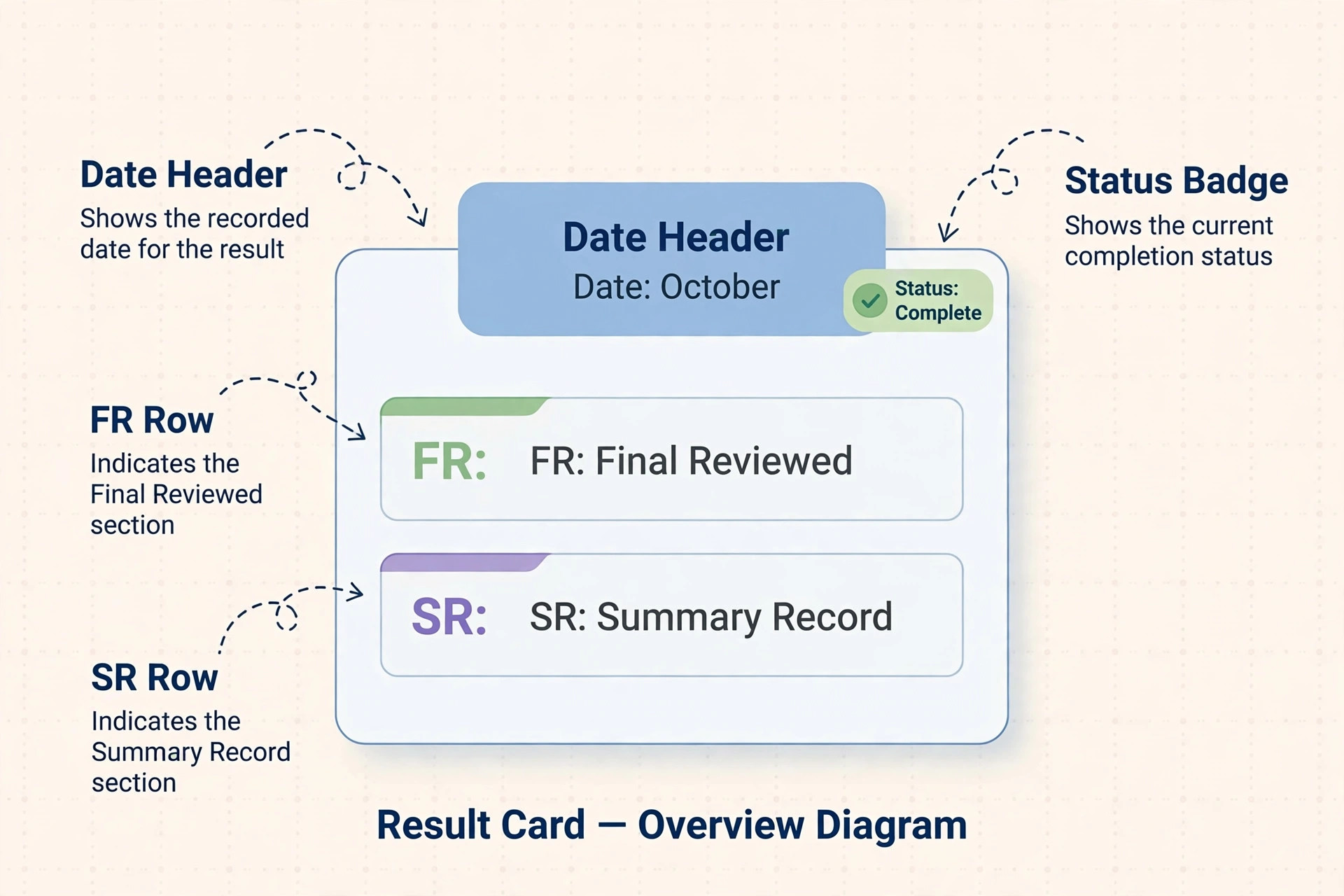
The Four Parts of Every Card
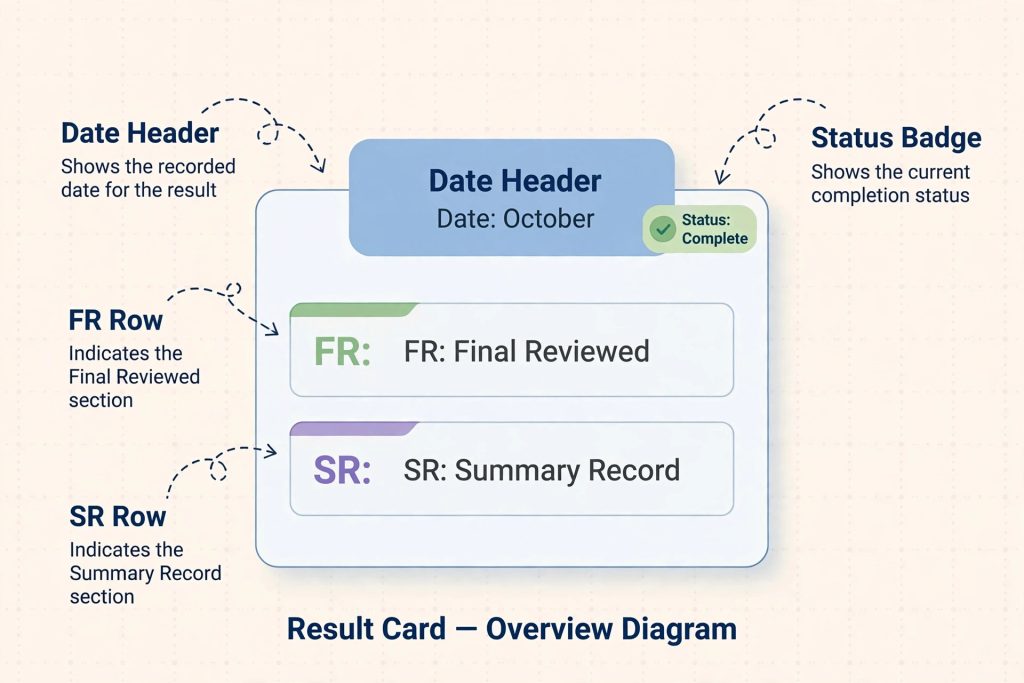
Open the live Jowai Ladrymbai teer result page and you will see the same anatomy every day. First comes the date header, which tells you exactly which day’s shooting the card belongs to. Always read this before the numbers. A card without a date check is how most mixups begin. Second is the FR row, labelled clearly as the first round. Third is the SR row for the second round. Fourth is the status area, which tells you whether each round is declared, awaited, or not held. Some cards show a placeholder such as “-” in a row whose round has not finished yet. That placeholder is honest design. It means the arrows have not been counted, not that the number is being hidden.
The Thirty Second Check Routine
Here is the routine to build into a habit. Step one, confirm the date header matches today. Step two, look at the FR row. If it shows a number, the first round is declared and done. If it shows a placeholder, the shooting or counting is still underway. Step three, look at the SR row with the same eyes. Step four, glance at the status labels to confirm what you just read. Done. Thirty seconds, no guesswork. Readers who follow the jowai teer result today from outside Meghalaya should do this check in the afternoon Indian time, when the rounds are shot, rather than in the morning when only yesterday’s card is complete.
Declared, Awaited, and Placeholder States
Three states cover everything you will ever see. “Declared” means the round was shot, the arrows were counted, and the number is official. “Awaited” means the round is scheduled but the number is not out yet, so check back later. A placeholder such as “-” in a number slot carries the same meaning as awaited. It is never a secret code and never a zero. Treating placeholders as real numbers is one of the most common beginner errors, and the card design is specifically meant to prevent it. When both rows are declared, the card for that date is final and will not change.
What FR and SR Actually Mean
FR and SR are the two halves of every teer day. Understanding them as sporting rounds, not just labels, makes the whole card intuitive. If the game itself is new to you, the Teer article at Wikipedia gives useful background on how the archery lottery works in Meghalaya.
FR Is the First Round of Archery
FR stands for the first round. In the afternoon session, archers gather at the ground and shoot the first of the day’s two rounds, loosing a set number of arrows at the target within the round’s format. Officials then count how many arrows struck the target. The last two digits of that count become the FR number that appears on the card. Think of FR as the opening half of a match. It sets the tone for the day but never decides anything on its own. On the daily result list, the FR column lets you scan weeks of opening rounds at a glance.
SR Is the Second Round of Archery
SR stands for the second round. After an interval following the first round, the archers shoot again under the same counting rules, and the last two digits of the new count become the SR number. The SR round is a completely fresh contest. Its arrows are new, its count is new, and its number has no mathematical link to the FR figure from an hour earlier. This independence matters more than most readers realise. Because each round starts from zero, the pair of numbers on the card is best read as two separate sporting outcomes printed side by side, not as a puzzle where one half hints at the other.
Why Teer Uses Two Rounds at All
The two round structure comes from the game’s design as a full afternoon event rather than a single moment. Two rounds give archers a second competitive outing, give spectators a longer afternoon at the ground, and give the licensed ticket system two distinct draws to organise around. For the reader, the practical consequence is simple. A “complete” jowai ladrymbai teer result always has two numbers. If your card shows only one declared row, the day is not over. Wait for the second, and never treat a half finished card as final.

When Jowai Ladrymbai Teer Results Are Declared
Timing questions cause more confusion than any other topic, so let us settle them with the facts and nothing else.
The Afternoon Pattern
The Jowai Ladrymbai session, like the other Meghalaya teer sessions, belongs to the afternoon. The FR round is shot first and its number is declared, then the SR round follows after an interval and its number is declared in turn. This site deliberately does not publish fixed clock times for these declarations, because the moment depends on real conditions at the grounds: how the shooting proceeds, how long the counting takes, and occasional weather delays. Any page on the internet that promises you an exact minute is guessing. The reliable rule is a window, not a timestamp. Check the live card during the afternoon, and you will catch each number within a short while of its declaration.
What To Do When a Number Seems Late
Some afternoons, the SR row stays blank longer than usual. Before assuming anything is wrong, run through this short checklist. First, confirm you are looking at today’s card and not yesterday’s. Second, check your connection and refresh once, since a stale page is the most common cause of a “missing” number. Third, look at the status label. If it says awaited, the round simply has not finished, and no amount of refreshing will hurry the archers. Fourth, consider the weather. Heavy rain in the Jaintia Hills can pause shooting, and the declaration waits for the arrows, not for your schedule. If the card still shows no number by late evening, the round may not have been held that day, which the status area will reflect.
Time Zones and Out of State Readers
Meghalaya runs on Indian Standard Time, and so does every declaration. If you follow the ladrymbai teer result from another state or another country, convert the afternoon window to your local time once and save yourself daily arithmetic. A reader in the Gulf, for example, will find the afternoon session landing in their own midday, while a reader on the US east coast will see it arrive in the small hours of the morning. The card does not care where you read it from. The date header always refers to the Meghalaya calendar day of the shooting, so match your records to that date to avoid off by one errors in your notes.
Interpreting the Two Numbers Correctly
Once both rows are declared, the natural question is what the pair means. The honest answer is refreshingly simple.
Each Number Is a Last Two Digit Count
Every teer number is the last two digits of an arrow count. In the FR round, officials count the arrows that hit the target, and the final two digits of that total become the FR figure. The SR figure is produced the same way from the second round’s count. That is the entire mechanism. There is no draw machine, no random number generator, and no committee choosing digits. The numbers are a compressed report of something physical that happened on a field that afternoon, dozens of arrows flying and a counted number of them striking home.
Reading the Pair Side by Side
Put the two numbers together and you have the day’s story in miniature. A useful way to read them is as a scoreline: FR tells you how the opening round went, SR tells you how the second round went, and the pair together is the complete result for the date. What the pair does not do is predict anything. Because each round is an independent round of archery, yesterday’s pair says nothing about today’s, and the FR figure says nothing about the SR figure an hour later. Readers who keep a notebook of past results should treat it as a diary of afternoons, interesting to look back on, useless as a forecast. This site publishes no prediction content of any kind, no common numbers, no target numbers, no house or ending tips, because the archery decides and nothing else can.
A Note on Sample Layouts
Occasionally you will see an illustration of a result card with numbers filled in to demonstrate the layout. Any such sample on this site is labelled clearly as example only and is never a real declared outcome. Real numbers appear only on the live card and in the archive, and on days when a round is pending, the card shows a placeholder such as “-” rather than a speculative figure. If you ever see a number presented without a date, a round label, and a declared status, treat it as unverified, no matter where you found it.

Using the Jowai Ladrymbai Teer Result List and Archive
The live card answers “what is today’s number.” The result list answers every other question about the past. Learning to use both is what separates casual checkers from confident ones.
The Daily List as Your Index
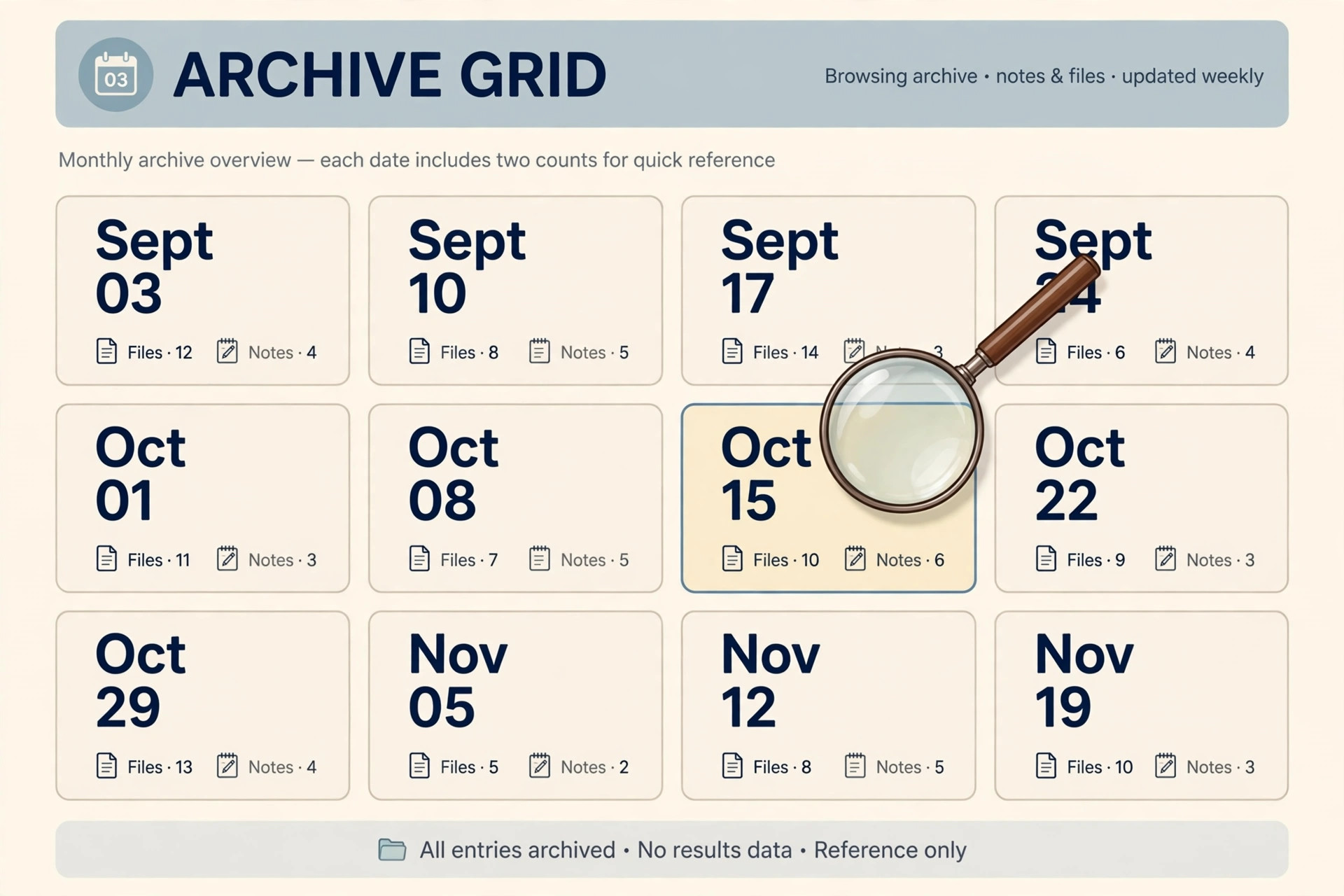
The teer result list page lays out each date with its FR and SR numbers in chronological order. Think of it as the index of a book where each day is a page. When you want to confirm what the jowai ladrymbai teer result was on a specific date, perhaps to settle a discussion or complete your records, the list gives you the answer in seconds. Bookmark it alongside the live card. The two pages work as a pair: the card for today, the list for everything before today.
Looking Up a Past Date
Date lookup has one golden rule. Match the date on the list to the Meghalaya calendar day of the shooting. Because declarations happen in the afternoon, there is no midnight ambiguity the way there is with late night draws in other lotteries. Each date owns exactly one FR and one SR number. If you keep personal records, write the date exactly as the list shows it, and keep the Jowai Ladrymbai session on its own page, separate from other sessions you may follow such as the Shillong teer result. Mixing sessions in one notebook is how phantom patterns are born.
The Archive Is a Record, Not a Forecast
It is tempting to stare at a month of numbers and see shapes in them. Human brains are pattern machines, and a grid of two digit numbers is fertile ground for imagination. Here is the discipline that experienced readers develop. The archive tells you what happened, in full, and it tells you nothing about what will happen next. Every round begins with unshot arrows, and no sequence of past counts can influence where the next volley lands. Enjoy the archive for what it is: a complete, honest history of afternoons in the Jaintia Hills. Anyone selling you a reading of it that claims to see tomorrow is selling fiction.
Common Mistakes When Checking the Jowai Ladrymbai Teer Result
Most checking errors fall into a handful of patterns. Run through them once and you will avoid nearly all of them forever.
Mistake 1 – Reading Yesterday’s Card as Today’s
This is the champion of all errors. A reader opens a bookmarked page, sees two declared numbers, and assumes they are fresh, when the tab has been sitting open since yesterday or the page cached overnight. The fix takes two seconds. Read the date header every single time before you read the numbers. If the date is not today, refresh or reopen the live card. Make the date check the first step of your routine and this mistake disappears permanently.
Mistake 2 – Treating a Placeholder as a Number
A “-” or an “awaited” label in the SR row does not mean the number is zero, hidden, or delayed by conspiracy. It means the second round has not been counted yet. Readers who screenshot a half finished card and forward it as the “final result” create confusion that ripples through chat groups for hours. Wait for both rows to show declared status before sharing or recording anything. A complete jowai ladrymbai teer result has two declared numbers and a matching date. Anything less is a work in progress.
Mistake 3 – Mixing Up Sessions
Jowai Ladrymbai, Shillong, Juwai, Khanapara. Meghalaya hosts several teer sessions, each with its own grounds, archers, and result card. Their numbers are independent, and reading the Shillong FR row as if it belonged to Jowai Ladrymbai is an easy slip when tabs multiply. Keep one bookmark per session, label your notes by session name, and when in doubt, check which page you are actually on. The site name and page heading always identify the session. Trust them over your memory of which tab you opened.
Mistake 4 – Trusting Screenshots Over the Live Card
A screenshot is frozen the moment it is taken. The live card is current the moment you load it. Between those two moments, an awaited round can become a declared one, and yesterday’s card can be replaced by today’s. Whenever a forwarded image and the live card disagree, the live card wins, every time, without exception. If you share results with friends or family, share the link to the live page rather than an image. You will save everyone the most common argument in teer chat groups.
Frequently Asked Questions
How do I check the jowai ladrymbai teer result?
Open the live result page for the Jowai Ladrymbai session, confirm the date header shows today, then read the FR row for the first round number and the SR row for the second round number. Check in the afternoon Indian time, when the rounds are shot and declared. If a row shows a placeholder such as “-“, that round is still awaited, so check back later.
What is the difference between FR and SR?
FR is the first round and SR is the second round of the day’s archery session. Each round is shot and counted separately, and each produces its own number from the last two digits of its arrow count. The two numbers together form the complete result for the date, but neither one influences the other.
At what time is the Jowai Ladrymbai result declared?
Results are typically declared in the afternoon, with the FR number appearing first and the SR number following after an interval. The exact moment varies day to day with the shooting and counting at the grounds, so this site does not publish fixed clock times. Checking the live card during the afternoon is the reliable method.
Why does the card sometimes show “-” instead of a number?
The placeholder means that round has not been declared yet. The archers may still be shooting, officials may still be counting, or the round may have been delayed. It is never a hidden number or a zero. Wait and refresh the live card later rather than treating the placeholder as a result.
Where can I find old Jowai Ladrymbai results?
The teer result list page keeps past dates in chronological order, each with its FR and SR numbers. Use it to look up any previous date’s result, keeping the Jowai Ladrymbai session separate from other sessions in your notes. The archive is a historical record, not a basis for predicting future rounds.
Is it safe to rely on result videos and screenshots from chat groups?
No. Screenshots freeze a moment in time and are frequently outdated, cropped, or taken from a different session’s card. Always verify against the live result page, reading the date header and both round rows yourself. When sharing with others, share the page link instead of an image.
Check Smart, Every Day
The whole method fits in a pocket. Open the live card, confirm the date, read FR, read SR, respect the placeholder, and use the result list for the past. Do that and the jowai ladrymbai teer result becomes what it should be: a quick, reliable, twice daily moment of clarity about an afternoon of archery in the Jaintia Hills. Bookmark the live page and the archive side by side, check in the afternoon, and never let a screenshot overrule the card. For official state information about regulated activities in Meghalaya, the state portal at meghalaya.gov.in is the authoritative reference.
A responsible play note: teer is a legal, state regulated lottery in Meghalaya for adults aged 18 and above only. Participate only through licensed counters, set a firm budget before you play, and keep the game as entertainment. If checking results ever stops being fun, step back. The archery will still be there tomorrow.